Cookie Settings
We use cookies to provide an optimal experience for you. Technically required cookies are used for making shopping possible, statistics are used for anonymized Google Analytics. You can read everything in our updated privacy policy.
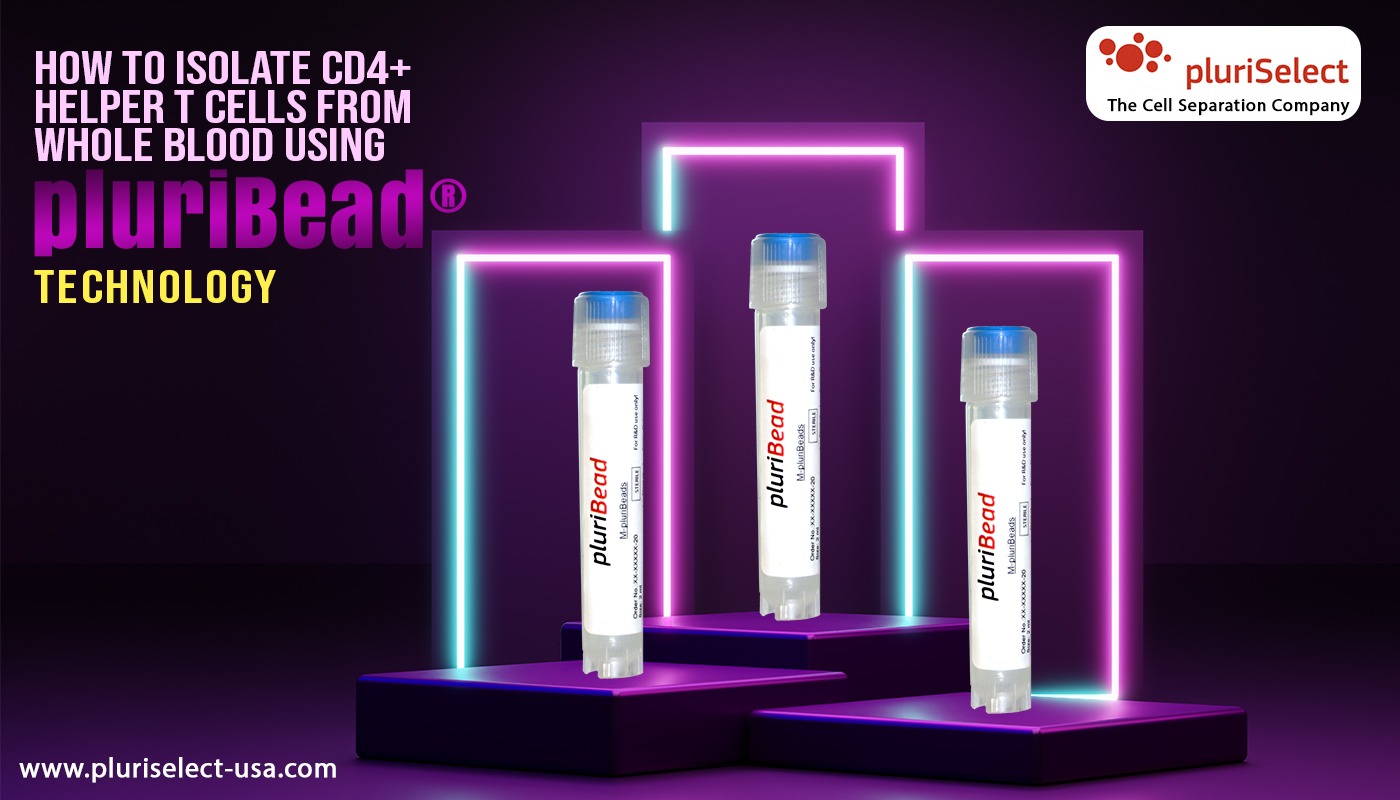
Helper T cells, commonly known as CD4+ T cells, play a central role in the adaptive immune system. They coordinate immune responses by activating other immune cells, including B cells, cytotoxic T cells, and macrophages. Because of their central regulatory role, CD4+ T cells are widely studied in immunology, infectious disease research, vaccine development, cancer immunotherapy, and autoimmune disease studies. To investigate these cells effectively, researchers must isolate them from complex biological samples such as whole blood. However, whole blood contains a mixture of leukocytes, erythrocytes, platelets, and plasma components. Traditional cell isolation techniques often require multiple preparation steps, including density gradient centrifugation, erythrocyte lysis, or magnetic bead separation.
While these approaches are widely used, they can introduce several challenges such as cell loss, activation of immune cells, and lengthy processing times. Modern laboratories increasingly seek faster, gentler, and more efficient isolation techniques that preserve cell viability and function. pluriBead® Technology offers a powerful alternative. Using non-magnetic microparticles coated with monoclonal antibodies, pluriBeads enable highly specific cell separation directly from complex samples such as whole blood, buffy coat, or tissue suspensions. Importantly, this technology does not require density gradient centrifugation or erythrocyte lysis before isolation, simplifying the workflow significantly.
In this article, we explain how CD4+ Helper T cells can be isolated directly from whole blood using pluriBead® technology. We will explore the scientific principles behind the method, the step-by-step workflow, and the advantages this technology provides for immunological research.
Before discussing isolation methods, it is important to understand the biological role of Helper T cells.
Helper T cells are a subset of T lymphocytes that express the CD4 glycoprotein on their surface. These cells recognize antigens presented by Major Histocompatibility Complex (MHC) class II molecules on antigen-presenting cells such as dendritic cells, macrophages, and B cells.
Once activated, Helper T cells rapidly proliferate and release signaling molecules called cytokines. These cytokines regulate many aspects of immune responses.
Key immune functions of Helper T cells include:
Activating B cells to produce antibodies
Stimulating cytotoxic T cells to destroy infected cells
Activating macrophages for pathogen clearance
Regulating inflammation and immune balance
Helper T cells can also differentiate into specialized subsets depending on immune signals received during activation. These subsets include:
TH1 cells, which support cellular immunity against intracellular pathogens
TH2 cells, which stimulate antibody production and allergic responses
TH17 cells, which promote inflammatory responses
TFH cells, which help B cells mature in lymph nodes
Because CD4+ T cells regulate multiple immune pathways, isolating them in high purity is critical for studying immune signaling and disease mechanisms.
Whole blood is a highly complex biological matrix. It contains several major cell populations:
Red blood cells (erythrocytes)
White blood cells (leukocytes)
Platelets
Plasma proteins
Among leukocytes themselves, many different cell types exist, including:
T lymphocytes
B lymphocytes
Natural killer cells
Monocytes
Granulocytes
Because CD4+ Helper T cells represent only a small fraction of total blood cells, isolating them requires a method that can selectively identify and separate them from the surrounding cells.
Traditional isolation methods include:
This method separates peripheral blood mononuclear cells (PBMCs) based on density. Although widely used, it requires several preparation steps and centrifugation cycles.
Magnetic beads coated with antibodies bind to target cells, which are then captured using magnetic fields. While effective, magnetic separation requires specialized equipment.
Fluorescence-activated cell sorting provides high purity but requires expensive instrumentation and is time-consuming for large sample volumes. Each of these techniques has advantages but also introduces potential issues such as cell activation, loss of viability, or complex workflows. pluriBead® technology offers an alternative that simplifies the isolation process.
pluriBead® technology uses non-magnetic monodispersed microparticles to capture specific target cells. Each pluriBead is coated with monoclonal antibodies directed against specific cell surface markers. For isolating CD4+ Helper T cells, the beads are coated with antibodies that recognize the CD4 receptor.
The technology relies on three key steps:
Binding of target cells to antibody-coated beads
Separation of bead-bound cells using a pluriStrainer®
Detachment of purified cells from the beads
Because the beads are larger than the cells, they cannot be phagocytosed or internalized by the cells. This approach enables selective cell capture while preserving cell integrity.
pluriBead® technology offers several benefits compared with traditional isolation methods.
Whole blood samples can be processed directly without erythrocyte lysis or density gradient centrifugation.
The process avoids strong magnetic forces or prolonged centrifugation that may stress cells.
Because the isolation process is gentle, cells remain viable and functional for downstream experiments.
pluriBeads can be used with multiple sample materials, including:
Whole blood
Buffy coat
PBMC suspensions
Tissue-derived cell suspensions
Cell culture samples
After separation, purified cells are detached from the beads using a specialized detachment buffer.
Before beginning the isolation procedure, ensure that the following materials are available:
pluriBead® suspension with CD4-specific antibodies
pluriStrainer® separation system
Wash buffer
Buffer A, Buffer B, Buffer C, Buffer D
Sterile centrifuge tubes (2 ml, 15 ml, or 50 ml)
Rotator or mixer
Micropipettes and tips
All reagents should be brought to room temperature before starting the procedure.
To isolate CD4+ T cells from whole blood, the sample must first be prepared. Add 50 µl of Buffer A per 1 ml of whole blood sample. Buffer A improves binding conditions and stabilizes the cells during separation. For samples derived from tissues or PBMCs, prepare a single-cell suspension before proceeding. Cell concentration should be adjusted to a maximum of 5 × 10⁶ target cells per milliliter. Pre-filtration with a strainer may be used to remove aggregates if necessary.
After sample preparation, the pluriBead suspension must be thoroughly mixed by vortexing.
Add pluriBeads to the sample according to the recommended ratio:
50 µl M-pluriBead suspension per 1 ml whole blood
Mix the beads and sample gently in a sterile tube.
Recommended tube sizes:
2 ml tube for small samples
15 ml tube for medium volumes
50 ml tube for large volumes
Incubate the mixture for up to 30 minutes at room temperature. During incubation, the beads must remain in suspension to ensure optimal cell binding. Mixing devices such as rotators, rockers, or roller mixers are ideal for this step.
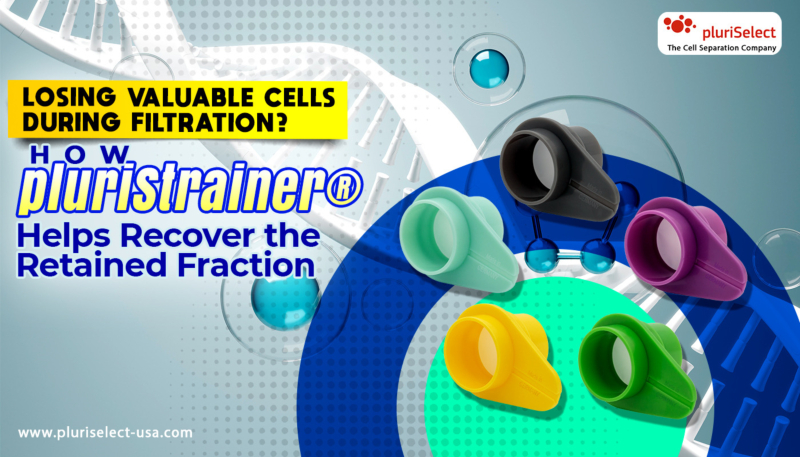
After incubation, bead-bound CD4+ cells must be separated from the remaining blood cells. Attach a pluriStrainer® to a sterile 50 ml centrifuge tube. The strainer works via size exclusion, allowing smaller unbound cells to pass through while retaining the larger bead-bound cells. Add 1 ml wash buffer to equilibrate the strainer. Next, pour the sample onto the strainer.
During this step:
Unbound cells pass through into the collection tube
Bead-bound CD4+ cells remain on the strainer surface
The flow-through fraction can be used for additional cell isolation procedures. Wash the strainer multiple times using wash buffer to remove remaining contaminants. A total washing volume of approximately 20 ml is recommended.
Once bead-bound cells are isolated on the strainer, the target cells must be released. Attach the connector ring and close the Luer-Lock system. Add activated Buffer D along the inner wall of the strainer. Incubate the sample for 10 minutes at room temperature. During incubation, gently swirl the strainer every two minutes. This detachment buffer breaks the interaction between the antibodies and the cell receptors. After incubation, pipette the suspension gently to release the cells from the beads. Open the Luer-Lock system. The purified CD4+ T cells will now flow into the collection tube while the beads remain on the strainer.
To recover the purified cells completely, wash the strainer several times with wash buffer. The collected cell suspension should then be transferred into a 15 ml centrifuge tube. Centrifuge the cells for 10 minutes at 300 × g without using the brake.
After centrifugation:
Remove most of the supernatant carefully
Resuspend the cell pellet in fresh buffer or culture medium
The isolated CD4+ Helper T cells are now ready for downstream applications.
pluriBeads are also available as Universal pluriBeads, which allow researchers to attach their own antibodies. This process involves incubating the beads with the desired antibody in PBS solution. The antibody-bead mixture is incubated for 3–4 hours at room temperature with continuous mixing. After washing, the custom antibody-coated beads can be used in the standard pluriBead isolation protocol. This flexibility allows researchers to isolate a wide range of cell types beyond CD4+ T cells.
Once isolated, CD4+ Helper T cells can be used for many experimental applications.
These include:
Cytokine secretion studies
T cell activation assays
Immune signaling research
Vaccine response analysis
Autoimmune disease studies
Cancer immunology experiments
High-purity CD4+ cells are also valuable for studying T cell differentiation into TH1, TH2, TH17, and other subsets.
Several factors can influence isolation efficiency.
If pluriBeads are not evenly distributed during incubation, target cells may not bind efficiently.
In tissue samples, prolonged digestion can damage surface receptors and reduce antibody binding efficiency.
Incomplete washing may leave contaminants on the strainer surface.
Rough pipetting during detachment may introduce air bubbles and reduce yield. Careful handling and proper protocol adherence help ensure optimal results.
Isolating CD4+ Helper T cells from whole blood is essential for many areas of immunological research. However, traditional isolation techniques often require multiple preparation steps, specialized equipment, and lengthy processing times. pluriBead® technology provides a powerful alternative. By using antibody-coated microparticles combined with size-based separation via pluriStrainer®, this method enables rapid and efficient isolation of CD4+ T cells directly from complex samples such as whole blood.
The workflow is simple, gentle, and highly adaptable to different sample types. Because no density gradient centrifugation or erythrocyte lysis is required, researchers can isolate cells faster while preserving cell viability and functionality. For laboratories studying immune responses, developing vaccines, or investigating T cell biology, pluriBead® technology represents a modern solution that simplifies cell isolation while maintaining high purity and yield.
As immunology research continues to advance, reliable tools for isolating specific immune cell populations will remain essential, and pluriBead® technology offers a robust platform for achieving this goal.











 The Cell Separation Company