Cookie Settings
We use cookies to provide an optimal experience for you. Technically required cookies are used for making shopping possible, statistics are used for anonymized Google Analytics. You can read everything in our updated privacy policy.
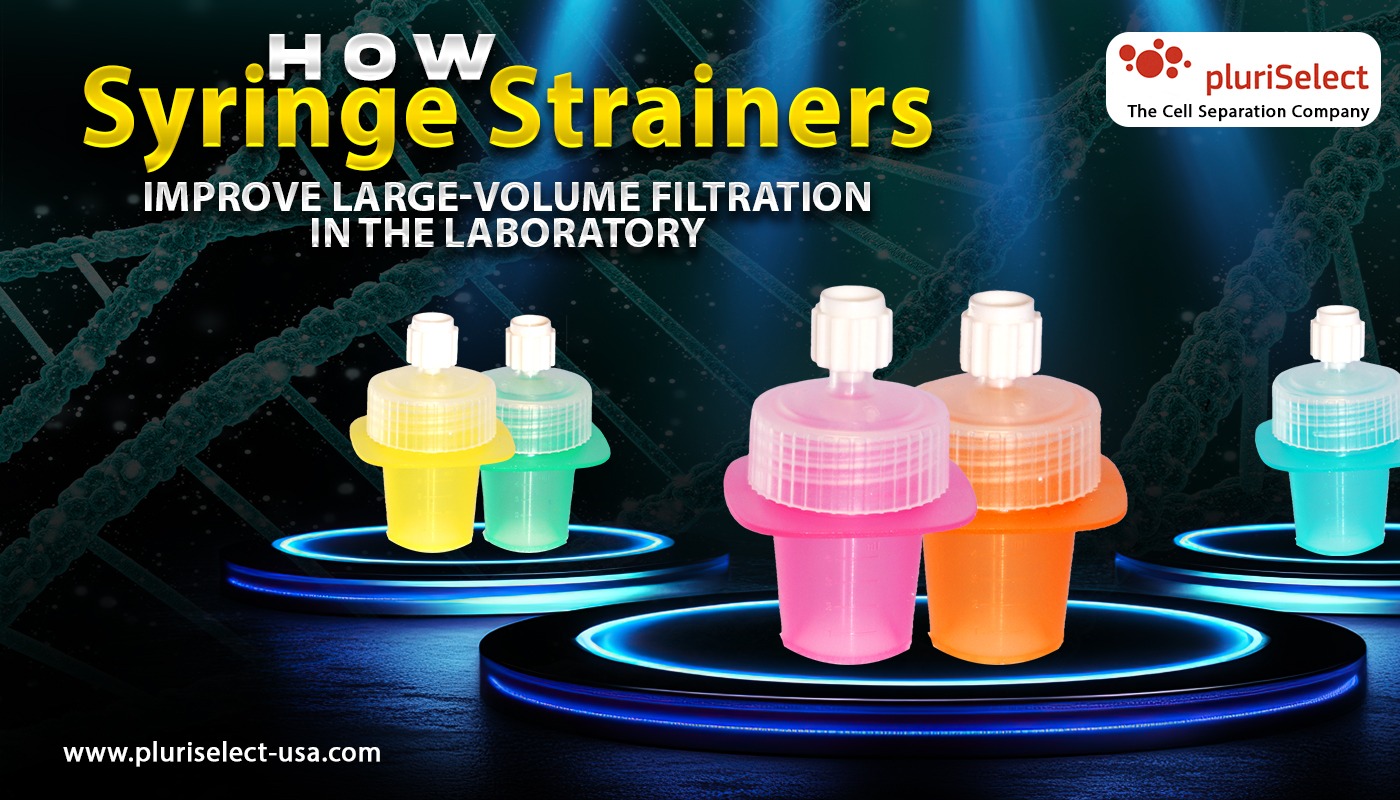
Filtration is one of the most fundamental steps in laboratory sample preparation. Whether researchers are working with biological suspensions, environmental samples, cell cultures, or chemical mixtures, separating particles from liquids is often necessary before downstream analysis can begin. Effective filtration ensures that unwanted debris, aggregates, and contaminants are removed, leaving behind a cleaner and more controlled sample.
However, filtration becomes significantly more challenging when dealing with large sample volumes. Traditional strainers and filtration devices are often designed for small-scale processing and rely primarily on gravity-based flow. While these tools may work well for simple samples, they frequently struggle when laboratories need to process larger volumes, higher particle concentrations, or more complex suspensions.
In many cases, researchers encounter slow filtration, repeated clogging, or inefficient recovery of particles. These issues not only delay workflows but can also lead to sample loss, reduced experimental accuracy, and increased labor. To overcome these limitations, laboratories increasingly rely on Syringe Strainers, a filtration device designed specifically for handling larger quantities of liquid while maintaining controlled particle separation. By connecting directly to a syringe or tube through a Luer-Lock adaptor, syringe strainers allow filtration to occur under positive or negative pressure, providing greater control over liquid flow and filtration efficiency.
This article explores how syringe strainers improve large-volume filtration in laboratory environments. We will discuss the limitations of conventional filtration approaches, the design principles of syringe strainers, and the advantages they bring to modern sample preparation workflows.
Many laboratory workflows require the filtration of liquid samples containing particles, cells, debris, or aggregates. When volumes are small, simple gravity-based filtration devices can often perform the task adequately. However, once sample volumes increase, the limitations of traditional strainers become more apparent. One major issue is slow flow rates. Gravity alone provides only a limited force to push liquid through a mesh or filter surface. As the volume of liquid increases, filtration can become extremely slow. This delay forces researchers to wait longer for filtration to complete, reducing overall laboratory efficiency.
Another challenge arises from particle accumulation. Many samples contain a mixture of large and small particles. When these particles reach the filtration surface, larger debris often blocks mesh openings, preventing liquid from passing through. Smaller particles may accumulate behind the larger ones, forming layers that further restrict flow.
As filtration slows, researchers often attempt to intervene by tapping the filter, stirring the sample, or pouring the liquid in smaller increments. While these actions may temporarily restore flow, they introduce new risks such as contamination, sample loss, and inconsistent results. Large-volume filtration also increases the likelihood of filter clogging. Once a filter surface becomes blocked, the entire filtration process may need to be restarted using a new device. This leads to wasted materials and additional time spent repeating preparation steps.
Finally, handling large sample volumes often requires multiple transfers between containers, which increases the risk of spills and sample degradation. Each additional handling step introduces opportunities for contamination or experimental variability. Because of these limitations, laboratories processing large volumes of liquid require a filtration method that provides greater control over liquid flow and particle separation.
Syringe strainers are designed to address the challenges associated with large-volume filtration. Unlike traditional strainers that rely entirely on gravity, syringe strainers allow researchers to apply controlled pressure during filtration. At its core, a syringe strainer functions as a sieving or filtration device that separates particles from liquids using a mesh or filtering surface. What makes syringe strainers different is their ability to connect directly to a syringe or tube via a Luer-Lock adaptor.
This connection enables the user to control filtration using either:
Positive pressure, created by pushing the syringe plunger
Negative pressure, generated by pulling the plunger
This pressure-driven filtration allows liquid to pass through the mesh more efficiently, even when working with complex or particle-rich samples.
The device itself typically consists of several key components:
A screw cap housing that secures the filtration mesh
A Luer-Lock connector for syringe attachment
A filtration mesh or sieve surface that retains particles
Because the device is sealed through the screw cap mechanism, filtration occurs in a more controlled environment compared with open filtration systems. By combining pressure control with efficient particle separation, syringe strainers offer laboratories a more reliable approach to processing large liquid volumes.
The defining advantage of syringe strainers lies in their ability to operate under controlled pressure. This feature fundamentally changes how filtration occurs. In gravity-based filtration, liquid movement depends entirely on the weight of the sample. As filtration progresses, the pressure pushing liquid through the mesh decreases because less liquid remains above the filter. This means filtration slows down as the process continues. Syringe strainers eliminate this limitation by allowing researchers to actively control the force driving filtration.
When positive pressure is applied by pushing the syringe plunger, liquid is forced through the filtration mesh. This steady pressure ensures that liquid continues to pass through the mesh at a consistent rate. Alternatively, negative pressure can be applied by pulling the syringe plunger. This creates suction that draws liquid through the filtration surface.
Both approaches provide several advantages:
Filtration occurs faster and more consistently
Particle buildup is less likely to halt the process
Researchers can control flow speed depending on sample characteristics
Because pressure can be adjusted gradually, filtration can be performed gently when working with delicate samples or more forcefully when processing dense suspensions.
Syringe strainers offer several practical benefits that make them particularly useful in laboratory environments where large liquid volumes must be processed.
Pressure-driven filtration gives researchers precise control over liquid movement. This control reduces the risk of sudden clogs and ensures consistent filtration performance.
Because liquid is actively pushed or pulled through the mesh, syringe strainers can handle larger sample volumes more efficiently than gravity-based strainers.
Applying pressure accelerates filtration, allowing laboratories to process samples faster and complete workflows more efficiently.
The filtration mesh captures particles while allowing liquid to pass through. Controlled flow ensures that particles are retained without excessive compaction.
Syringe strainers connect directly to syringes or tubes, minimizing the need for repeated pouring or transfers between containers.
The Luer-Lock connection allows syringe strainers to integrate easily into a variety of laboratory setups.
Syringe strainers can be used across many different laboratory disciplines where particle separation from liquids is required.
In cell biology laboratories, syringe strainers help remove cell aggregates and debris from cell suspensions before analysis.
During tissue dissociation procedures, syringe strainers can help remove larger tissue fragments while retaining single cells for downstream experiments.
Environmental laboratories frequently process water, soil extracts, and other samples containing mixed particles. Syringe strainers allow efficient separation of solid debris from liquid samples.
Microbiology workflows often require filtering culture media to remove aggregates or particulate matter before analysis.
In analytical chemistry applications, syringe strainers help remove particulate contaminants that could interfere with instruments such as chromatography systems.
Another important function of syringe strainers is their ability to concentrate particles from liquid samples. When liquid is forced through the filtration mesh, particles larger than the mesh size remain on the filter surface. As more liquid passes through, these retained particles accumulate and become concentrated.
This process can be particularly useful in workflows where:
Target particles are present in low concentrations
Large liquid volumes must be processed
Samples must be concentrated prior to analysis
For example, researchers working with environmental samples may process large volumes of liquid to collect microorganisms or suspended particles. By filtering these samples through a syringe strainer, particles can be concentrated into a smaller volume for further study.
Clogging is one of the most common problems in filtration workflows. When particles accumulate on a filter surface, they can block mesh openings and stop liquid flow.
Syringe strainers help minimize clogging through controlled pressure application. When filtration slows due to particle buildup, researchers can adjust the pressure applied to the syringe. This gentle pressure helps move liquid through partially obstructed areas of the mesh without damaging the filter surface.
Additionally, because pressure can be applied gradually, filtration can proceed without forcing particles too aggressively into the mesh openings. This reduces the likelihood of complete blockage. The ability to control pressure also means that filtration can be paused or resumed easily without disrupting the sample.
One of the strengths of syringe strainers is their compatibility with existing laboratory equipment. Laboratories often rely on standardized connectors and fluid handling systems, and syringe strainers are designed to integrate smoothly into these setups without requiring specialized tools or complex modifications.
Because the device uses a standard Luer-Lock connection, it can attach easily to many types of syringes and laboratory tubing systems already present in most research environments. This universal compatibility allows researchers to introduce syringe strainers into their workflows quickly, making them a practical addition to both small-scale and high-throughput laboratory operations.
This compatibility allows syringe strainers to be integrated into workflows such as:
Manual syringe filtration
Vacuum-assisted filtration setups
Liquid transfer systems
Sample preparation stations
In manual workflows, researchers can directly connect the device to a syringe and control filtration through gentle pressure. In more advanced setups, syringe strainers can be incorporated into tubing systems to support continuous sample preparation.
By incorporating syringe strainers into existing workflows, laboratories can improve filtration efficiency while maintaining familiar procedures and equipment. This flexibility makes them a convenient and cost-effective solution for laboratories seeking to enhance large-volume filtration processes without investing in new infrastructure.
In many laboratory experiments, maintaining sample integrity is just as important as achieving effective filtration. Biological samples such as cell suspensions, tissue extracts, or delicate molecular preparations can be easily altered if they are exposed to excessive mechanical force, contamination, or repeated handling steps. Filtration methods that apply uncontrolled pressure or require multiple transfers between containers may compromise the quality of the sample before it even reaches downstream analysis. Syringe strainers help address these challenges by providing a more controlled and protective filtration environment.
One of the primary advantages of syringe strainers is the ability to regulate filtration pressure. Because the device connects directly to a syringe, researchers can apply pressure gradually and precisely. This controlled approach allows liquid to pass through the filtration mesh without exposing the sample to sudden force or turbulence. For fragile biological materials such as immune cells, stem cells, or microbial cultures, gentle filtration helps maintain cell viability and prevents physical damage to membranes or surface receptors.
Another important factor is the closed filtration design created by the screw-cap housing and Luer-Lock connection. Traditional open filtration systems expose samples to the surrounding environment during pouring or transfer steps. In contrast, syringe strainers operate within a sealed system, reducing the likelihood of airborne contaminants entering the sample. This feature is particularly valuable in laboratories working with sterile cell cultures or sensitive biochemical preparations.
Finally, syringe strainers reduce the need for multiple handling steps. Because the device can be attached directly to syringes or tubing, filtration can occur in a single controlled step. Minimizing transfers between containers lowers the risk of sample loss and prevents unnecessary agitation that could alter sample composition. Together, these advantages make syringe strainers an effective tool for preserving sample purity, stability, and experimental reliability during filtration workflows.
Large-volume filtration presents unique challenges in laboratory environments. Traditional gravity-based strainers often struggle when handling complex suspensions, dense particle mixtures, or extended sample volumes. Slow filtration, frequent clogging, and excessive sample handling can significantly reduce workflow efficiency. Syringe strainers provide a practical solution to these challenges. By combining a filtration mesh with a Luer-Lock syringe connection, these devices enable controlled filtration under positive or negative pressure. This pressure-driven approach allows liquid to pass through the mesh more efficiently while maintaining precise control over particle separation.
The result is a filtration system that is faster, more adaptable, and better suited for large-volume sample preparation. Laboratories can process samples with greater efficiency, reduce handling steps, and improve the reliability of filtration outcomes.
As laboratory workflows continue to grow in complexity and scale, tools that simplify sample preparation become increasingly valuable. Syringe strainers represent a versatile and effective approach to large-volume filtration, helping researchers maintain both efficiency and precision in their experimental processes.









 The Cell Separation Company