Cookie Settings
We use cookies to provide an optimal experience for you. Technically required cookies are used for making shopping possible, statistics are used for anonymized Google Analytics. You can read everything in our updated privacy policy.
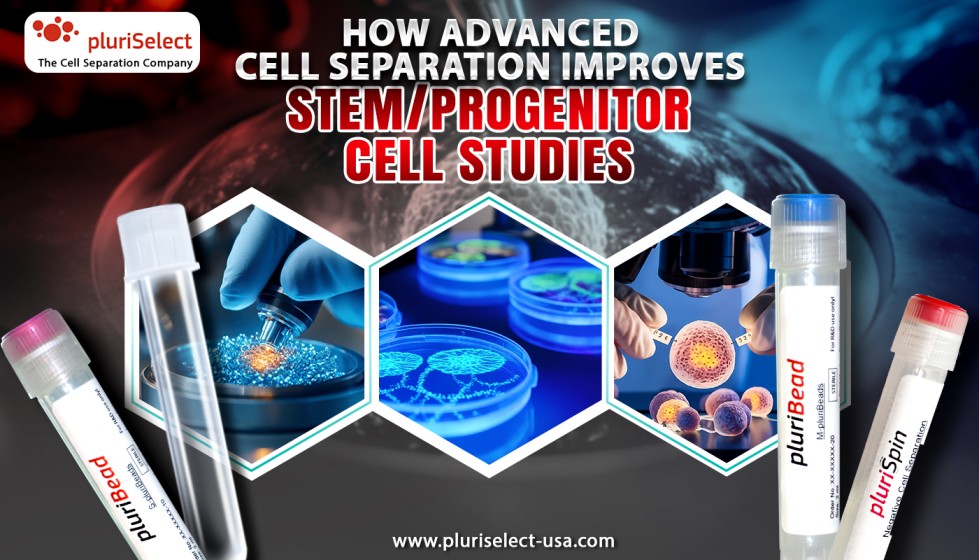
Stem and progenitor cell research continues to expand across vascular biology, immunology, regenerative medicine, and disease modeling. Researchers are increasingly interested in understanding how specialized cell populations respond to tissue injury, participate in repair processes, and contribute to vascular remodeling.
Among these populations, vascular wall-resident stem/progenitor cells have attracted growing attention because of their ability to differentiate into vascular-related cell types under specific conditions. Studies involving CD34+ progenitor cells are helping researchers better understand vascular injury responses, smooth muscle cell behavior, and tissue homeostasis.
However, studying these rare and sensitive cell populations requires more than standard laboratory preparation methods. Successful experiments depend heavily on accurate and reproducible cell isolation. Poor separation quality can introduce contamination, reduce viability, and affect downstream analysis. This is why advanced cell separation technologies are becoming increasingly important in stem/progenitor cell research. Reliable isolation systems help researchers obtain cleaner cell populations while minimizing stress during sample preparation.
pluriSelect develops cell and protein separation technologies optimized for research in immunology, diagnostics, and basic science. With high-quality products designed and manufactured in Germany, pluriSelect supports laboratories working with complex cell populations and advanced enrichment workflows. This article explores how advanced cell separation improves stem/progenitor cell studies and how pluriSelect technologies help researchers achieve more reliable experimental results.
Stem and progenitor cells are important because they have the ability to self-renew and differentiate into specialized cell types. In vascular research, scientists are particularly interested in how these cells participate in tissue maintenance, repair, and remodeling after injury.
One area of interest involves CD34+ vascular wall-resident stem/progenitor cells located within the adventitial layer of blood vessels. These cells have demonstrated the ability to respond to injury-related signals and differentiate into smooth muscle cell-like populations under certain conditions.
Research involving vascular injury models has shown that these progenitor cells participate in vascular remodeling processes and may contribute to maintaining vascular wall homeostasis. Understanding these mechanisms requires precise separation of specific cell populations from highly complex tissue environments. Because progenitor cells often represent only a small fraction of total cells, reliable isolation methods are essential.
Stem/progenitor cell research presents several technical challenges during sample preparation and analysis.
Many progenitor cells exist in very low numbers within tissues or blood samples. Isolating these rare populations efficiently can be difficult using conventional methods.
Low target abundance increases the importance of:
High recovery efficiency
Accurate enrichment
Reduced sample loss
Vascular tissues contain many different cell types, including:
Smooth muscle cells
Endothelial cells
Leukocytes
Fibroblasts
Progenitor cells
Separating target populations from this complex mixture requires selective and controlled isolation strategies.
Contamination from unwanted cells can interfere with downstream studies, particularly when analyzing differentiation behavior or molecular signaling.
Poor purity may affect:
Flow cytometry analysis
Gene expression studies
Functional assays
Cell culture experiments
Harsh separation methods may damage sensitive progenitor cells or alter their biological behavior.
Excessive handling, strong mechanical forces, or stressful processing conditions can:
Reduce viability
Affect cell surface markers
Alter differentiation potential
Manual workflows often introduce variability between operators and experiments.
This can make it difficult to:
Compare results between studies
Standardize protocols
Maintain consistent enrichment quality
In vascular remodeling studies, the quality of isolated cells directly influences experimental outcomes.
Researchers studying CD34+ progenitor cells need separation workflows that preserve:
Cell viability
Functional behavior
Surface marker expression
Differentiation potential
If unwanted cells remain in the sample, interpretation of results becomes more difficult. Similarly, if isolation procedures damage target cells, downstream assays may no longer reflect natural biological responses. Advanced cell separation technologies help reduce these problems by improving both enrichment quality and workflow consistency.
CD34+ vascular wall-resident stem/progenitor cells are found primarily within the adventitial region of blood vessels. These cells are of interest because they demonstrate several important biological properties.
Studies have identified CD34+ progenitor populations in the vascular adventitia, separate from mature smooth muscle cells located within the media layer. This distinct localization supports the idea that different vascular cell populations perform specialized roles during tissue remodeling.
Under specific signaling conditions, CD34+ progenitor cells may differentiate into smooth muscle-like cells expressing early smooth muscle markers. This behavior makes them valuable for studying vascular repair and remodeling mechanisms.
Research suggests that these progenitor cells respond to vascular injury and participate in maintaining vascular wall organization during remodeling processes. Understanding these responses requires highly controlled cell isolation workflows.
Because vascular remodeling is involved in conditions such as arterial injury and occlusive disease development, progenitor cell studies continue to gain importance in translational research.
Traditional separation methods are often not optimized for rare and sensitive progenitor populations. Many older workflows were originally designed for abundant cell types and general-purpose isolation rather than highly specialized stem/progenitor cell studies. As a result, researchers frequently face challenges such as low recovery, inconsistent purity, and excessive handling stress during sample preparation.
Modern stem cell research increasingly depends on advanced separation approaches that improve:
Purity
Cleaner enrichment helps researchers study target populations without interference from unwanted cells. This is especially important when analyzing differentiation pathways, signaling behavior, or vascular remodeling responses.
Recovery
Rare progenitor cells may represent only a very small percentage of the total sample. Efficient recovery becomes critical because losing even a small number of cells can affect downstream experiments and reduce statistical reliability.
Viability
Stem and progenitor cells are highly sensitive to harsh processing conditions. Gentle separation methods help preserve cell health, functionality, and biological behavior after isolation.
Reproducibility
Standardized separation workflows reduce operator-dependent variability and improve consistency between experiments, laboratories, and research studies.
Advanced enrichment technologies allow researchers to isolate target populations more efficiently while reducing unnecessary stress during processing. Instead of relying on repeated centrifugation or extensive manual handling, modern systems are designed to simplify workflows while maintaining sample quality.
This becomes especially important when working with:
Rare CD34+ cells
These populations often require highly selective enrichment methods to achieve reliable isolation from complex vascular or tissue-derived samples.
Delicate progenitor populations
Sensitive cells can lose functionality if exposed to aggressive handling, prolonged processing, or unstable separation conditions.
Functional downstream assays
Applications such as flow cytometry, molecular analysis, differentiation studies, and cell culture all depend on obtaining viable and reproducible cell populations.
As stem/progenitor cell research continues to advance, improved cell separation technologies are becoming essential tools for generating accurate, reproducible, and biologically meaningful results.
pluriSelect develops products specifically optimized for advanced cell separation applications in immunology, diagnostics, and basic science.
The company focuses on providing:
High-quality separation products
Reliable workflow solutions
Easy-to-use technologies
Consistent research performance
pluriSelect products are developed and manufactured in Germany, with an emphasis on quality and reproducibility.
The company supports researchers working on:
Autoimmune disease research
Vascular biology
Circulating tumor cells
Stem/progenitor cell studies
This combination of product quality and application-focused design helps laboratories improve separation performance while simplifying complex workflows.
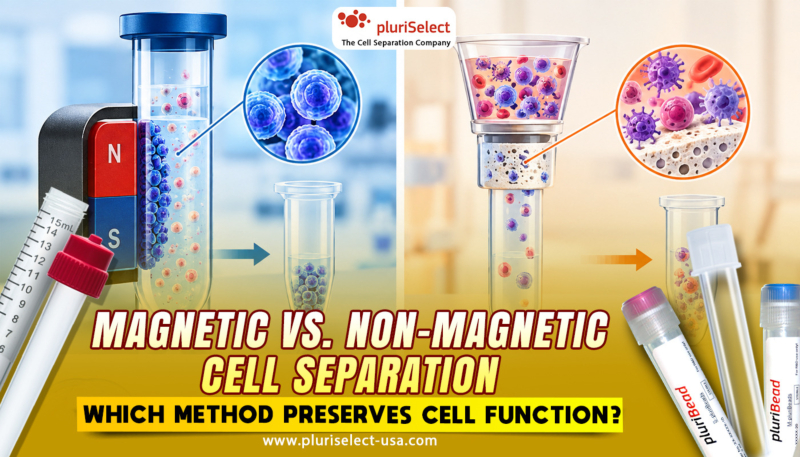
One of the core technologies developed by pluriSelect is pluriBead® technology. pluriBead® uses non-magnetic monodispersed microparticles coated with monoclonal antibodies directed against specific target cell markers.
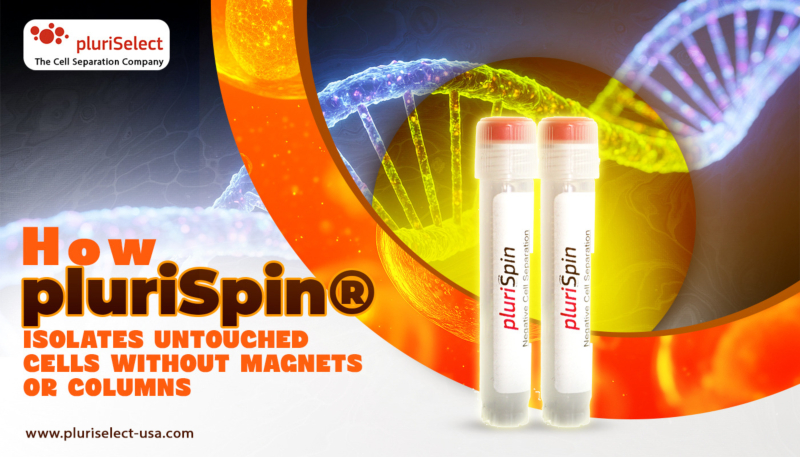
Unlike magnetic systems, pluriBead® performs separation without magnets or columns. This helps simplify workflows while reducing mechanical complexity during processing.
pluriBead® can isolate target cells directly from:
Whole blood
Buffy coat
Tissue-derived suspensions
Cell cultures
This reduces the need for extensive sample pre-processing.
The beads selectively bind target populations through antibody-mediated recognition. This supports more precise enrichment of rare cell populations such as CD34+ progenitor cells.
The separation process is designed to minimize stress during isolation. Gentle handling supports:
Better viability
Preserved functionality
Improved downstream analysis
Because rare progenitor populations may exist at very low frequencies, recovery efficiency becomes critical. pluriBead® workflows help improve recovery while maintaining cleaner enrichment conditions.
Stem/progenitor cells are highly sensitive to environmental stress during isolation. Aggressive processing may alter:
Cell behavior
Differentiation capacity
Surface marker expression
Maintaining gentle separation conditions helps preserve the biological properties required for accurate downstream studies.
Advanced separation systems help reduce:
Mechanical stress
Excessive centrifugation
Repeated handling steps
This improves the reliability of experimental outcomes.
High-quality cell separation improves many downstream research applications by providing cleaner, more reliable, and biologically relevant cell populations. In stem/progenitor cell studies, the quality of the starting material directly influences the accuracy and reproducibility of experimental results. Advanced separation workflows help reduce contamination, preserve cell functionality, and improve consistency across multiple applications.
Flow cytometry depends heavily on clean and well-prepared cell suspensions. Contaminating cells, debris, or aggregates can interfere with gating strategies and reduce data quality.
Cleaner enrichment helps:
Improve gating accuracy
Reduce background contamination
Minimize signal interference
Produce more reproducible measurements
This is especially important when analyzing rare CD34+ progenitor populations or studying subtle differences in marker expression.
Functional assays are designed to evaluate how cells respond to different biological conditions. Poor sample purity can influence signaling behavior and create variability in experimental outcomes.
Improved enrichment supports more reliable studies involving:
Cell activation
Migration behavior
Cytokine responses
Cellular signaling pathways
By reducing contamination from unrelated cell populations, researchers can better interpret functional responses.
Many vascular research projects investigate how progenitor cells differentiate into smooth muscle-like or vascular-related cell types. Maintaining progenitor cell integrity during isolation is essential for these studies.
Gentle and efficient separation workflows help preserve:
Cell viability
Surface marker expression
Differentiation potential
Biological functionality
This improves the reliability of differentiation experiments and supports more accurate analysis of vascular remodeling processes.
RNA, DNA, and protein studies require highly purified cell populations to generate meaningful results. Contamination from unwanted cells may alter gene expression profiles and reduce analytical accuracy.
Cleaner samples improve:
RNA isolation quality
DNA analysis consistency
Protein detection reliability
Molecular profiling accuracy
High-quality enrichment becomes particularly important in studies involving rare progenitor populations where sample quantity may already be limited.
Research involving vascular injury and remodeling depends on accurate characterization of multiple vascular cell populations. Reliable enrichment allows researchers to better investigate how stem/progenitor cells and smooth muscle cells respond during tissue repair processes.
Improved separation supports studies involving:
Injury-induced vascular responses
Cell migration behavior
Remodeling mechanisms
Cellular interactions within the vascular wall
By improving consistency and purity, advanced cell separation technologies help generate more reproducible and biologically meaningful vascular research data.
Reproducibility remains one of the biggest challenges in modern biological research.
Advanced separation systems help reduce variability by providing:
Standardized workflows
More consistent enrichment conditions
Reduced operator dependency
This improves confidence in experimental comparisons across studies and laboratories.
pluriSelect products are optimized specifically for advanced research applications.
The technologies are designed to support immunology, diagnostics, and vascular research workflows.
Simplified workflows help reduce handling complexity and improve laboratory efficiency.
Manufacturing in Germany supports consistent product performance and quality control.
pluriSelect technologies are suitable for:
Rare cell isolation
Stem/progenitor cell enrichment
Complex tissue preparation
Advanced vascular studies
The company’s focus on specialized research areas helps ensure that products are aligned with modern laboratory needs.
Stem and progenitor cell research continues to play an increasingly important role in understanding vascular remodeling, tissue repair, and disease progression. Studies involving CD34+ vascular wall-resident stem/progenitor cells require highly controlled workflows capable of isolating rare and sensitive cell populations with high purity and reproducibility. Advanced cell separation technologies help researchers overcome many of the limitations associated with traditional isolation methods. Improved enrichment strategies support cleaner cell populations, better viability, and more reliable downstream analysis.
pluriSelect supports these workflows through high-quality separation technologies optimized for immunology, diagnostics, and vascular research. Products such as pluriBead® help simplify complex cell isolation while maintaining gentle handling conditions that preserve cell integrity. As stem/progenitor cell studies continue to evolve, reliable separation systems will remain essential for generating reproducible and meaningful research results.









 The Cell Separation Company