pluriSelect Blog

Choosing Between Positive and Negative Separation: A Practical Guide for Routine Lab Work

Choosing Between Positive and Negative Separation: A Practical Guide for Routine Lab Work
Two of the most commonly used methods are positive cell separation and negative cell separation.
Read more

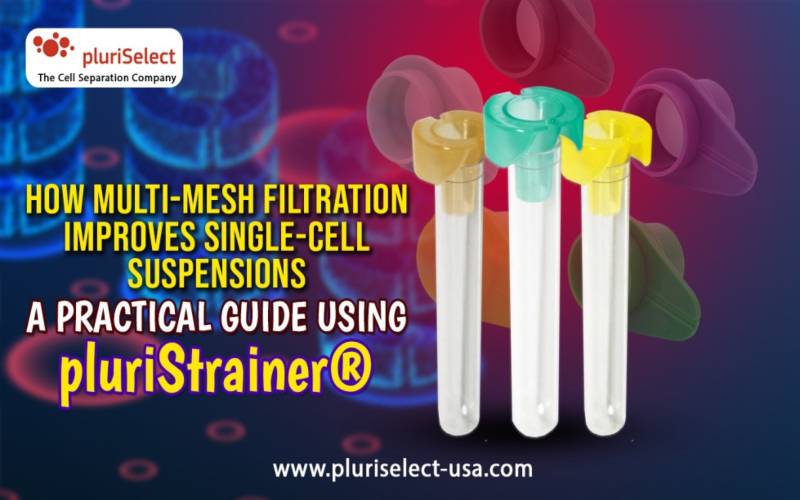
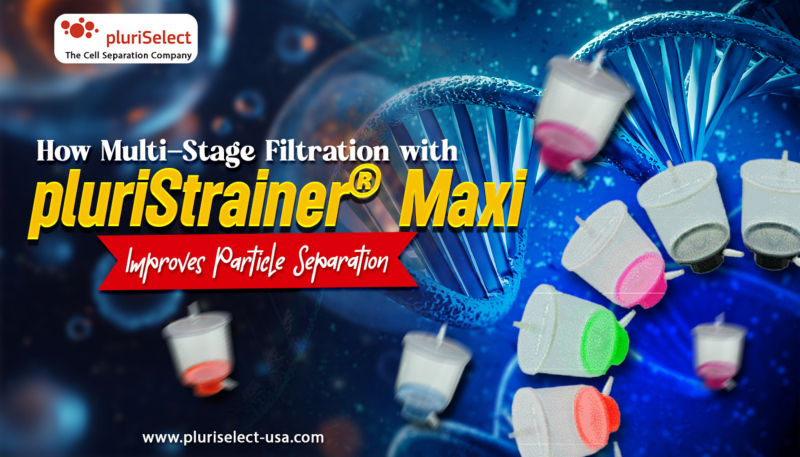
How Multi-Mesh Filtration Improves Single-Cell Suspensions

How Multi-Mesh Filtration Improves Single-Cell Suspensions
In this guide, we explore how multi-mesh filtration works, why it improves single-cell suspensions
Read more

How TwinSpin Tubes Simplify Density Gradient Centrifugation for Whole Blood

How TwinSpin Tubes Simplify Density Gradient Centrifugation for Whole Blood
Density gradient centrifugation remains one of the most widely used methods for separating cells...
Read more

Why Overlaying Whole Blood Causes Errors, and How pluriMate Eliminates the Risk

Why Overlaying Whole Blood Causes Errors, and How pluriMate Eliminates the Risk
Density gradient centrifugation is a well-established method for separating leukocytes and...
Read more

How pluriSpin Removes Platelets Without Damaging Target Cells

How pluriSpin Removes Platelets Without Damaging Target Cells
This article explains why platelet contamination is such a persistent issue, how conventional...
Read more

What Is a Buffy Coat? A Practical Guide for Cell Isolation Workflows

What Is a Buffy Coat? A Practical Guide for Cell Isolation Workflows
Buffy coat plays a central role in modern cell isolation workflows by offering a concentrated and...
Read more

Removing Large Impurities from Complex Samples Using Steel Basket-Strainers

Removing Large Impurities from Complex Samples Using Steel Basket-Strainers
Many laboratories rely on membrane-based tools such as a Lab cell strainer for particle filtration....
Read more

Choosing the Right Density Gradient Medium for TwinSpin Tubes

Choosing the Right Density Gradient Medium for TwinSpin Tubes
Density gradient centrifugation remains a foundational method in modern laboratories for separating...
Read more

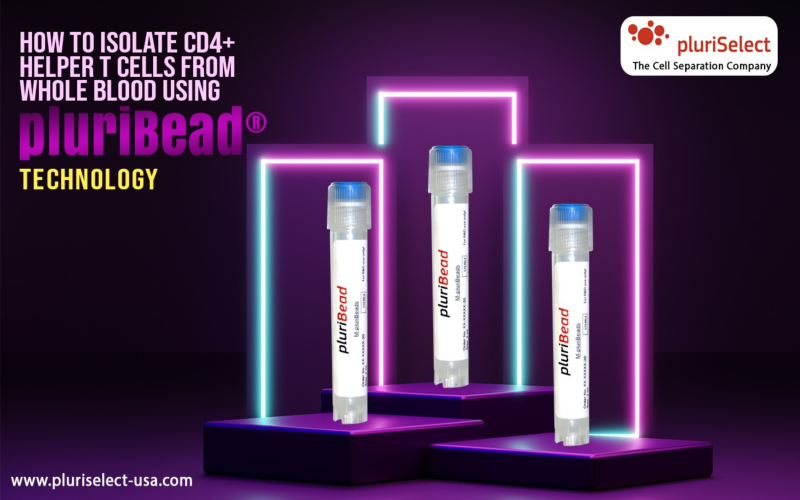
How to Isolate CD4+ Helper T Cells from Whole Blood Using pluriBead® Technology

How to Isolate CD4+ Helper T Cells from Whole Blood Using pluriBead® Technology
In this article, we explain how CD4+ Helper T cells can be isolated directly from whole blood using...
Read more

How Syringe Strainers Improve Large-Volume Filtration in the Laboratory

How Syringe Strainers Improve Large-Volume Filtration in the Laboratory
Filtration is one of the most fundamental steps in laboratory sample preparation. Whether...
Read more

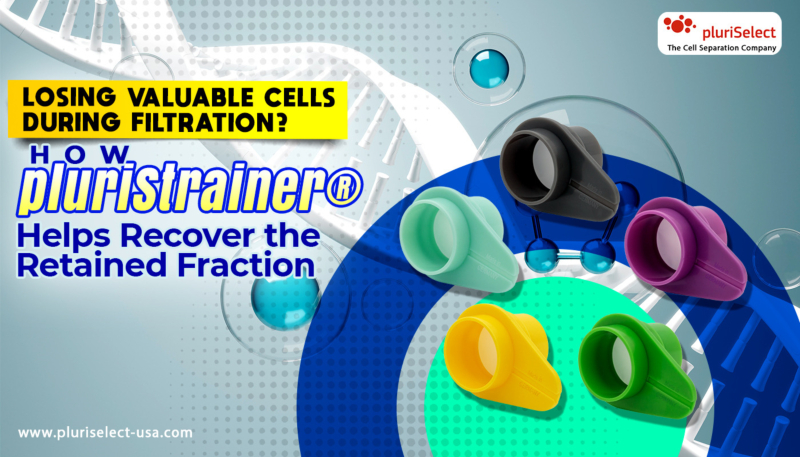
7 Filtration Mistakes That Reduce Cell Recovery (And How pluriStrainer® Fixes Them)

7 Filtration Mistakes That Reduce Cell Recovery (And How pluriStrainer® Fixes Them)
In many laboratory workflows, filtration is one of the first steps in preparing biological samples....
Read more

Preparing Single-Cell Suspensions Faster with SnapCap Strainer

Preparing Single-Cell Suspensions Faster with SnapCap Strainer
This article explores how SnapCap Strainer helps laboratories prepare single-cell suspensions...
Read more

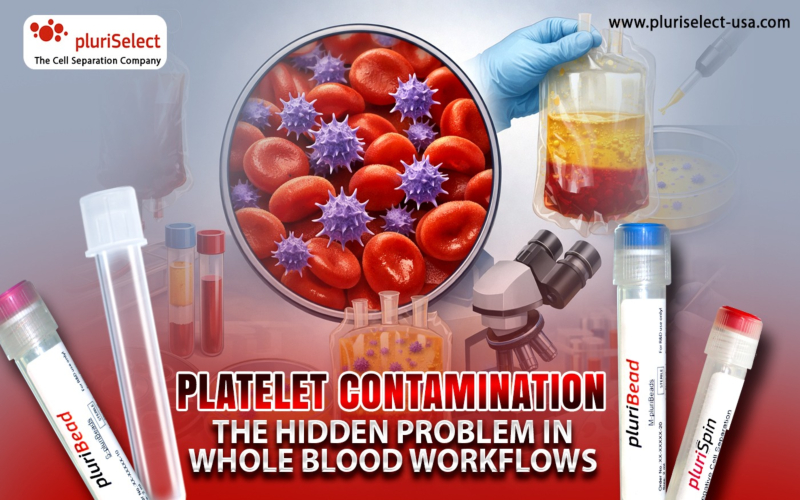
Platelet Contamination: The Hidden Problem in Whole Blood Workflows

Platelet Contamination: The Hidden Problem in Whole Blood Workflows
Whole blood workflows are widely used in research and clinical laboratories for isolating immune...
Read more

Clogging in High-Volume Samples: What Causes It and How to Prevent It

Clogging in High-Volume Samples: What Causes It and How to Prevent It
Filtration is a routine step in many laboratory and industrial workflows, but it becomes far more...
Read more

How Advanced Cell Separation Improves Stem/Progenitor Cell Studies

How Advanced Cell Separation Improves Stem/Progenitor Cell Studies
Stem and progenitor cell research continues to expand across vascular biology, immunology,...
Read more