Cookie Settings
We use cookies to provide an optimal experience for you. Technically required cookies are used for making shopping possible, statistics are used for anonymized Google Analytics. You can read everything in our updated privacy policy.
Blood sample preparation is an important part of cell separation workflows, particularly when researchers need to isolate leukocytes or peripheral blood mononuclear cells (PBMCs) from whole blood. The quality of the prepared sample can influence subsequent laboratory procedures, making careful handling essential throughout the process.
Traditional density gradient separation involves several preparation steps. Researchers typically add a density gradient medium to a centrifuge tube and carefully layer the blood sample over it. This requires controlled pipetting and attention to the interface between the two liquids. The sample must then be centrifuged under the recommended conditions to separate cell populations according to their density.
Although this approach is widely used, manual layering adds another task to sample preparation. It can also require additional care when transferring and handling the sample, particularly when multiple samples need to be processed.
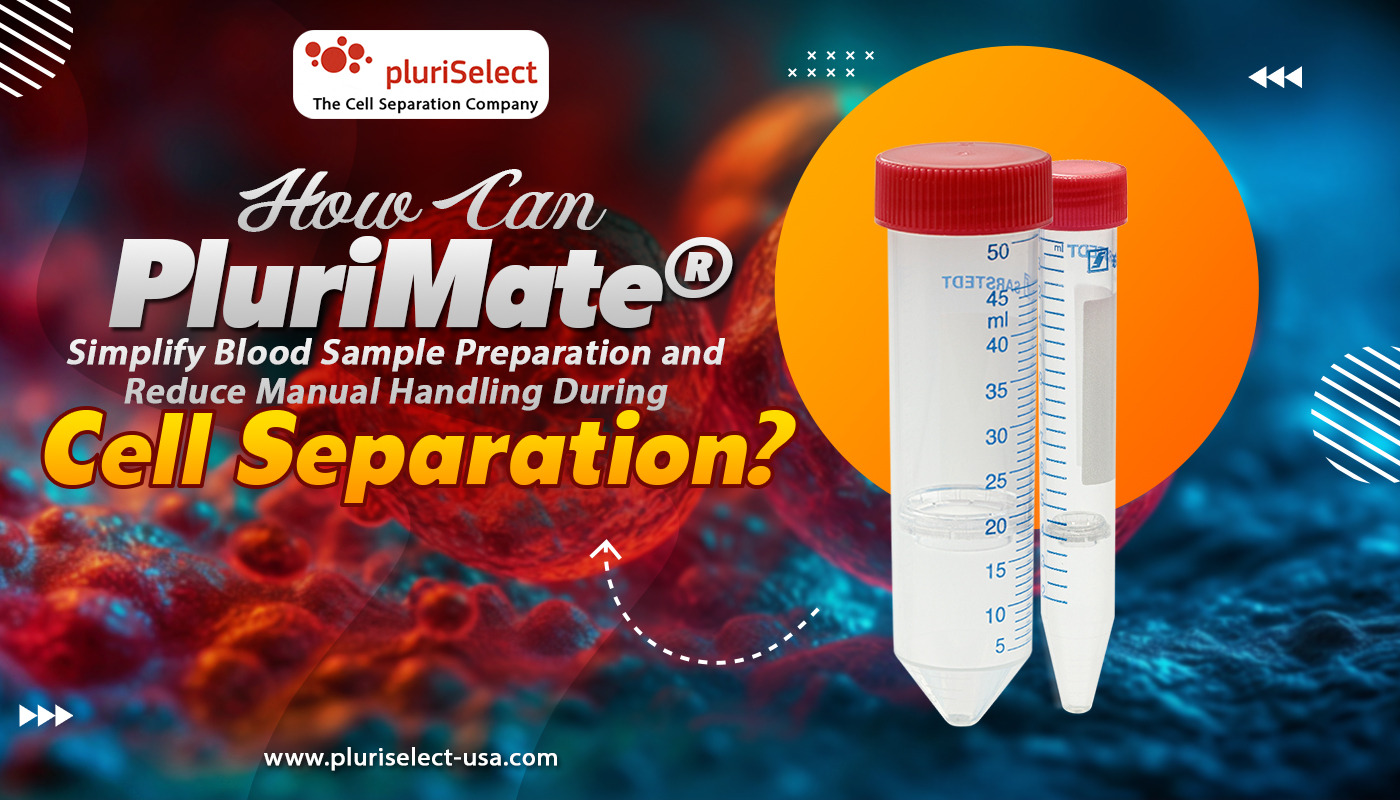
PluriMate® offers a simpler approach to this preparation stage. Designed for the separation of leukocytes and PBMCs from whole blood and bone marrow, it features a built-in porous polyurethane sponge barrier at the bottom of the centrifuge tube. This design allows researchers to pour the sample directly into the tube without manually layering it over the density gradient medium.
By reducing the need for this manual step, PluriMate® helps make sample preparation more straightforward while supporting the subsequent cell separation process.
Manual handling is an important consideration in density gradient separation because sample preparation involves more than simply adding blood to a centrifuge tube. Researchers must carefully arrange the sample and density gradient medium before centrifugation. Several steps can make this process time-consuming and require additional attention.
In conventional density gradient workflows, blood is generally layered over the density gradient medium. The two liquids need to remain sufficiently separated before centrifugation so that cell populations can be distributed according to their density during the process.
Creating this layer requires controlled pipetting. If the sample is dispensed too quickly or the interface is disturbed, the blood and density gradient medium may mix prematurely. This can affect the separation interface and make the preparation process less consistent.
The layering step therefore requires practice and careful handling, particularly when processing several samples.
Manually layering blood over a density gradient medium adds another operation to the preparation workflow. Researchers need to handle the pipette, position the sample carefully and check that the layers remain appropriately arranged before centrifugation.
When several samples are being processed, these individual steps can add to the overall preparation time. The amount of hands-on work may become more noticeable in laboratories handling multiple blood or bone marrow samples. Reducing unnecessary manual operations can help simplify this stage of the workflow.
Every additional handling step creates another opportunity for accidental disturbance. Moving tubes, transferring liquids and pipetting near an existing interface require attention. If the sample layers are disturbed, researchers may need to reassess the preparation before proceeding. Careful handling is also important during subsequent cell harvesting, when the enriched cell fraction must be collected without unnecessarily disturbing surrounding layers.
These challenges highlight why simplifying sample loading can be useful. Reducing the number of manual operations does not eliminate the need for careful handling, but it can make the preparation process easier to manage.
PluriMate® addresses one of the manual steps involved in density gradient separation: layering the blood sample over the density gradient medium. Its built-in sponge barrier changes how the sample is introduced into the centrifuge tube.
The main design feature of PluriMate® is a porous sponge made from high-grade polyurethane, positioned at the bottom of the centrifuge tube. This sponge acts as a physical barrier between the sample and the density gradient medium during loading. Instead of requiring researchers to carefully pipette blood over the medium, the sample can be poured directly into the tube.
The sponge helps prevent the blood sample from mixing prematurely with the density gradient medium. This makes it possible to simplify the loading process while maintaining the separation setup needed for subsequent centrifugation.
In a conventional workflow, researchers must carefully layer the blood sample over the density gradient medium. PluriMate® removes the need for this particular operation. The sample can be poured directly into the tube, allowing researchers to avoid the careful pipetting required for manual overlaying. This reduces the number of preparation steps and makes sample introduction more straightforward.
For laboratories processing multiple samples, removing a repetitive manual operation can make the workflow easier to organize. Researchers can spend less time arranging individual sample layers and focus on the remaining preparation and separation steps.
Importantly, direct loading does not mean that all sample handling requirements disappear. Researchers must still follow the recommended protocol, use the appropriate density gradient medium and handle the tubes carefully.
Once the sample has been loaded, the tube is centrifuged according to the recommended procedure. During centrifugation, cell populations separate based on their density in relation to the selected density gradient medium. Leukocytes and PBMCs become enriched at the interface, while other blood components distribute according to their density. The exact separation profile depends on the sample and the density gradient medium used.
The sponge barrier supports the preparation arrangement by helping keep the sample and density gradient medium from mixing prematurely during loading. It therefore allows researchers to use a direct-loading approach without performing the conventional manual overlay step.
PluriMate® is designed for leukocyte and PBMC separation from whole blood and bone marrow. These sample types are used in a range of research workflows, including studies that require enriched immune cell populations for downstream laboratory applications.
The direct-loading design can simplify the preparation stage for both sample types. However, researchers should select a density gradient medium that matches their intended target cell population and follow the corresponding protocol.
The product is compatible with density gradient media such as Leuko Spin, Lympho Spin and PLT Spin, depending on the intended separation.
Reducing manual handling is not simply about making sample preparation faster. It can also help laboratories organize routine procedures, limit unnecessary sample manipulation and maintain a more manageable workflow.
PluriMate® supports these objectives by removing the need for manual sample overlaying. Its practical value can be understood through the following aspects.
Manual layering requires researchers to carefully pipette blood over the density gradient medium. PluriMate® replaces this operation with direct sample loading.
Removing this step reduces the number of manual actions required before centrifugation. This can be particularly useful when preparing several samples, as researchers do not need to repeat the same careful layering procedure for every tube. Although the remaining preparation steps still need to be performed correctly, a simpler loading process can make routine workflows easier to manage.
Blood and bone marrow samples may be used in different cell enrichment procedures. Preparing these samples can involve several handling requirements, depending on the target population and downstream application.
PluriMate® provides a direct-loading approach for both sample types. Researchers can introduce the sample into the tube without manually creating a layer over the density gradient medium.
This design helps standardize the sample loading stage by reducing reliance on the manual overlay technique. It does not replace the need to follow sample-specific protocols, but it offers a more straightforward way to begin the separation process.
Sample preparation is only one part of a successful cell separation workflow. After centrifugation, researchers must also collect the enriched cell fraction carefully.
Disturbing the interface during harvesting or carrying unwanted material into the collected fraction can affect sample quality. Minimizing unnecessary transfers and handling during the overall workflow can help researchers maintain better control over the collected material.
PluriMate® supports the initial separation setup through its sponge barrier and direct-loading design. Researchers should still take care when identifying and collecting the enriched fraction, following appropriate washing and handling procedures for their intended application.
The product supports a more manageable workflow, but it does not guarantee complete removal of unwanted cells or eliminate the need to assess the final sample.
The density gradient medium plays an important role in determining how cell populations separate during centrifugation. Researchers should select a medium based on the target cells and the requirements of the intended application.
PluriMate® is compatible with Leuko Spin, Lympho Spin and PLT Spin. The appropriate choice depends on the separation objective, so researchers should consult the relevant product instructions before starting the procedure. Using the recommended medium and following the specified protocol helps ensure that the direct-loading design is incorporated into an appropriate separation workflow.
Reducing manual operations can make sample preparation easier to manage, but it should be combined with good laboratory practices. Factors such as sample condition, storage, anticoagulant selection and handling time can influence cell recovery, purity and viability.
Researchers should therefore evaluate the final enriched fraction according to their downstream requirements. Monitoring these parameters helps determine whether the selected workflow is suitable for a particular sample type and application.
PluriMate® simplifies the loading stage; careful protocol selection and sample assessment remain essential for reliable results.
Manual sample layering is one of the preparation steps that can add time and handling requirements to density gradient cell separation. Carefully pipetting blood over the density gradient medium requires attention and can become repetitive when laboratories process multiple samples.
PluriMate® simplifies this stage through its built-in porous polyurethane sponge barrier. By allowing researchers to pour whole blood or bone marrow directly into the centrifuge tube, it removes the need for manual overlaying and helps prevent premature mixing with the density gradient medium. During centrifugation, leukocytes and PBMCs become enriched at the interface according to the selected medium and separation conditions. This design provides a more straightforward sample loading process while supporting the established principles of density gradient separation.
For laboratories looking to reduce repetitive preparation steps and simplify cell separation workflows, PluriMate® offers a practical approach to sample handling.
Explore PluriMate® from pluriSelect to learn how its direct-loading design can support your laboratory's blood and bone marrow cell separation procedures.












 The Cell Separation Company