Cookie Settings
We use cookies to provide an optimal experience for you. Technically required cookies are used for making shopping possible, statistics are used for anonymized Google Analytics. You can read everything in our updated privacy policy.
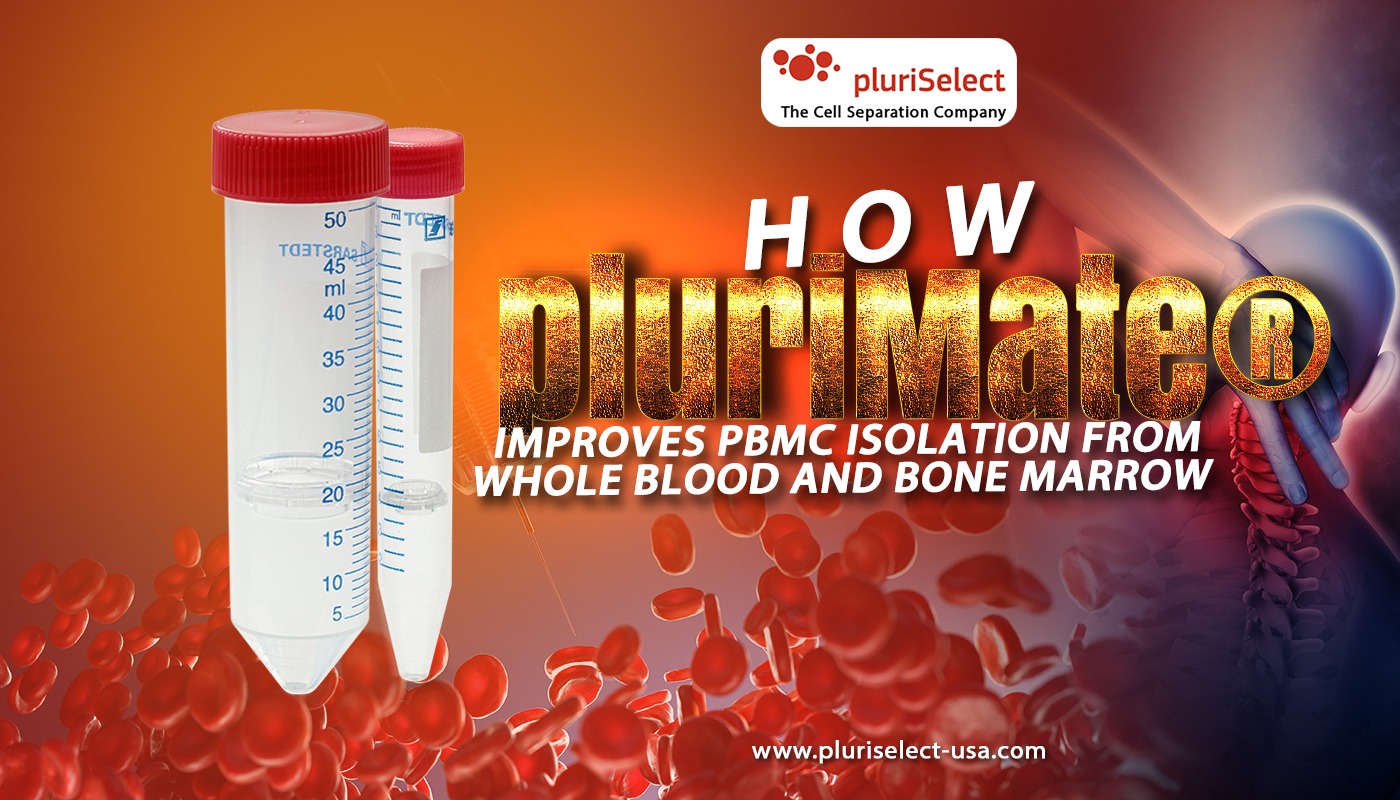
Peripheral blood mononuclear cells (PBMCs) are among the most frequently isolated cell populations in laboratory research. They are widely used in immunology, cell biology, and many other research applications where a well-defined cell population is required for downstream analysis. Because PBMC isolation serves as the starting point for numerous experimental workflows, researchers place significant importance on obtaining clean cell fractions while maintaining an efficient and reproducible preparation process.
Density gradient centrifugation remains one of the most established methods for isolating PBMCs from whole blood and bone marrow. By separating cells according to density, the technique enriches the desired cell populations while removing unwanted erythrocytes and granulocytes. Although the underlying separation principle has remained reliable for many years, certain stages of the workflow still require careful manual handling.
One of the most time-consuming steps involves preparing the sample before centrifugation. Conventional protocols require researchers to carefully overlay anticoagulated blood or bone marrow onto the density gradient medium while avoiding mixing between the two layers. This preparation demands attention for every sample and can become increasingly labor-intensive when processing multiple specimens.
Many laboratories therefore seek solutions that improve workflow efficiency without requiring major changes to established density gradient centrifugation protocols. Rather than introducing an entirely new separation method, they prefer systems that simplify routine procedures while preserving the familiar workflow.
The pluriMate® tube was developed to achieve this objective. Designed for efficient separation of leukocytes and PBMCs from whole blood and bone marrow, it incorporates a porous polyurethane sponge at the bottom of the centrifuge tube. This barrier allows anticoagulated blood or bone marrow to be poured directly into the tube, eliminating the need for manual sample overlay while preventing the sample from mixing with the separation medium.
Instead of changing how density gradient centrifugation works, pluriMate® simplifies sample preparation and supports cleaner harvesting after centrifugation. This article explores how the pluriMate® tube improves PBMC isolation while allowing researchers to continue using the density gradient workflows they already know.
PBMC isolation is a routine laboratory procedure that separates peripheral blood mononuclear cells from other cellular components found in whole blood or bone marrow. The objective is to enrich the desired cell population while separating unwanted cells according to the density gradient being used.
Density gradient centrifugation provides an effective way to achieve this separation. During centrifugation, different cell populations migrate according to their density, allowing PBMCs and other target cells to become concentrated within a distinct layer above the separation medium.
Although the separation itself occurs during centrifugation, successful PBMC isolation begins much earlier with proper sample preparation.
Whole blood contains multiple cell populations that must be separated during centrifugation. Before the centrifuge is started, anticoagulated blood must first be introduced into the density gradient system while maintaining proper separation between the sample and the density gradient medium.
In conventional workflows, this usually involves carefully overlaying the sample above the separation medium without disturbing the interface.
Bone marrow samples follow a similar preparation process. Researchers must introduce the sample into the centrifuge tube while maintaining separation from the density gradient medium before centrifugation begins.
Because the preparation method is similar to whole blood, the same practical challenges associated with manual sample overlay are often encountered.
One of the most important aspects of PBMC isolation is preventing premature mixing between the sample material and the density gradient medium.
Maintaining a clear separation before centrifugation helps ensure that cells migrate appropriately during the centrifugation process. Any unnecessary disturbance during sample loading may complicate preparation and require additional care from the researcher.
For this reason, laboratories value systems that simplify sample loading while preserving the conditions needed for effective density gradient centrifugation.
Although density gradient centrifugation is a well-established method for PBMC isolation, the preparation and harvesting stages continue to present practical challenges during routine laboratory work.
Traditional protocols require researchers to carefully layer anticoagulated whole blood or bone marrow over the density gradient medium. This procedure demands a steady hand because excessive mixing before centrifugation can interfere with the intended separation process. Every sample must be prepared individually, making manual overlay one of the most time-consuming parts of the workflow.
Maintaining a clear boundary between the sample and the separation medium is essential before centrifugation begins.
If the sample is introduced too quickly or handled improperly, mixing may occur before separation takes place. Researchers therefore spend considerable time ensuring that each sample is loaded carefully.
Preparing one sample may only require a short period, but laboratories often process multiple specimens in succession. Repeating the manual overlay procedure for every tube increases the total preparation time before centrifugation can begin, reducing overall laboratory efficiency.
The final stage of PBMC isolation involves collecting the enriched cell fraction after centrifugation.
During harvesting, disturbing the lower layers may allow unwanted erythrocytes or granulocytes to enter the collected PBMC fraction. Researchers therefore need to perform this step carefully to maintain the quality of the isolated cells.
These practical challenges have encouraged laboratories to adopt solutions that simplify sample preparation and support cleaner harvesting without changing the familiar density gradient centrifugation process.
The pluriMate® tube has been designed specifically to simplify one of the most delicate stages of PBMC isolation: loading the sample before centrifugation.
Its defining feature is a porous sponge manufactured from high-grade polyurethane and positioned at the bottom of the centrifuge tube. This sponge acts as a barrier between the sample material and the density gradient medium during preparation.
Instead of carefully layering anticoagulated whole blood or bone marrow above the density gradient, researchers simply pour the sample directly from the sampling tube into the pluriMate® tube.
The porous barrier prevents the sample from mixing with the separation medium before centrifugation, eliminating the need for manual overlay while preserving the standard density gradient centrifugation workflow.
Importantly, the separation principle itself remains unchanged. Laboratories continue using their preferred density gradient media and established centrifugation protocols. The improvement lies entirely in simplifying sample preparation before centrifugation begins. By removing one of the most time-consuming manual steps, pluriMate® helps laboratories prepare PBMC isolation samples more efficiently while maintaining the familiar procedures researchers already trust.
Once the sample has been added to the pluriMate® tube, the remainder of the workflow follows the familiar principles of density gradient centrifugation. The porous polyurethane sponge simplifies sample preparation but does not alter the separation process itself. Researchers continue using the same centrifugation protocols while benefiting from a more convenient method of sample loading.
During centrifugation, cells separate according to the density gradient medium being used. Peripheral blood mononuclear cells (PBMCs), together with leukocytes and lymphocytes, migrate to the appropriate position within the tube while unwanted erythrocytes and granulocytes separate into different layers.
As the separation progresses, the target cells become enriched in the interphase located above the separation medium. This enriched layer contains the cell population that researchers collect for downstream laboratory applications.
The use of the pluriMate® tube does not change this established separation principle. Instead, it supports the process by ensuring that the sample enters centrifugation under appropriate conditions without requiring manual overlay.
Different laboratory applications require different density gradient media depending on the desired target cells.
The pluriMate® tube is compatible with commonly used density gradient media, including:
Leuko Spin
Lympho Spin
PLT Spin
Researchers can continue selecting the density gradient medium that best matches their experimental objectives while using the same simplified sample preparation procedure provided by the pluriMate® tube.
One of the practical advantages of pluriMate® is that it fits naturally into existing laboratory procedures.
Researchers do not need to modify centrifugation settings or adopt a different separation technique. Once the sample has been loaded directly into the tube, centrifugation proceeds exactly as it would in a conventional density gradient workflow.
This allows laboratories to improve workflow efficiency without changing the methods that have already become part of their routine procedures.
The quality of PBMC isolation depends not only on successful separation during centrifugation but also on careful collection of the enriched cell fraction afterward.
Harvesting is the final stage before the isolated PBMCs move into downstream applications. During this step, maintaining the purity of the enriched fraction is important for obtaining reliable laboratory results.
After centrifugation, the porous polyurethane barrier continues to serve an important function. The barrier prevents recontamination of the enriched cell fraction during harvesting. Even as researchers collect the interphase containing PBMCs, the barrier helps keep unwanted erythrocytes and granulocytes separated from the target cells.
This additional protection supports cleaner collection of the enriched fraction without requiring changes to the harvesting procedure.
Laboratories frequently process different sample volumes depending on specimen availability or research requirements.
An important feature of the pluriMate® tube is that the barrier continues to prevent recontamination regardless of the sample volume being processed. Researchers can therefore follow the same harvesting procedure while maintaining confidence in the separation across different experiments.
The quality of the harvested PBMC fraction directly influences later laboratory procedures. Starting with a cleaner enriched cell population allows researchers to continue with downstream applications using well-prepared samples that have been isolated through an efficient and familiar workflow.
The pluriMate® tube provides several practical advantages that improve routine PBMC isolation while preserving established density gradient centrifugation methods.
Eliminating manual sample overlay significantly reduces preparation time before centrifugation begins.
Instead of carefully layering every sample above the density gradient medium, researchers simply pour anticoagulated whole blood or bone marrow directly into the pluriMate® tube. This simplified loading procedure becomes especially valuable when multiple samples are processed during the same laboratory session.
Removing one of the most delicate preparation steps makes the overall workflow easier to perform. Researchers spend less time preparing each sample while continuing to follow the same centrifugation and harvesting procedures they already know.
Manual overlay depends on careful technique and attention for every sample. Because the porous barrier prevents mixing during loading, the pluriMate® tube creates a more standardized preparation procedure that reduces dependence on manual overlay skills.
One of the strengths of the pluriMate® tube is that laboratories do not need to redesign their PBMC isolation protocols.
Researchers continue using the same density gradient media, centrifugation procedures, and harvesting techniques. The improvement comes from simplifying sample preparation rather than replacing the underlying method.
This allows laboratories to adopt the pluriMate® tube with minimal disruption to established workflows.
PBMC isolation from whole blood and bone marrow remains an essential laboratory procedure, and density gradient centrifugation continues to be one of the most trusted methods for achieving reliable cell separation. While the separation principle itself is well established, conventional workflows often require careful manual sample overlay and equally careful harvesting after centrifugation.
The pluriMate® tube simplifies these routine steps without changing the underlying density gradient centrifugation process. Its porous polyurethane sponge barrier allows anticoagulated whole blood or bone marrow to be poured directly into the tube while preventing the sample from mixing with the separation medium before centrifugation begins.
During centrifugation, PBMCs, leukocytes, and lymphocytes are enriched in the interphase above the selected density gradient medium, while unwanted erythrocytes and granulocytes remain separated according to the density gradient used. After separation, the same porous barrier helps prevent recontamination of the enriched cell fraction during harvesting, regardless of sample volume.
By eliminating manual sample overlay, supporting cleaner harvesting, and integrating seamlessly into established laboratory protocols, pluriMate® improves the efficiency of PBMC isolation while preserving the familiar workflow researchers already trust. For laboratories seeking a practical way to simplify routine PBMC preparation from whole blood and bone marrow, the pluriMate® tube offers a solution that enhances workflow efficiency without changing the proven principles of density gradient centrifugation.












 The Cell Separation Company