Cookie Settings
We use cookies to provide an optimal experience for you. Technically required cookies are used for making shopping possible, statistics are used for anonymized Google Analytics. You can read everything in our updated privacy policy.
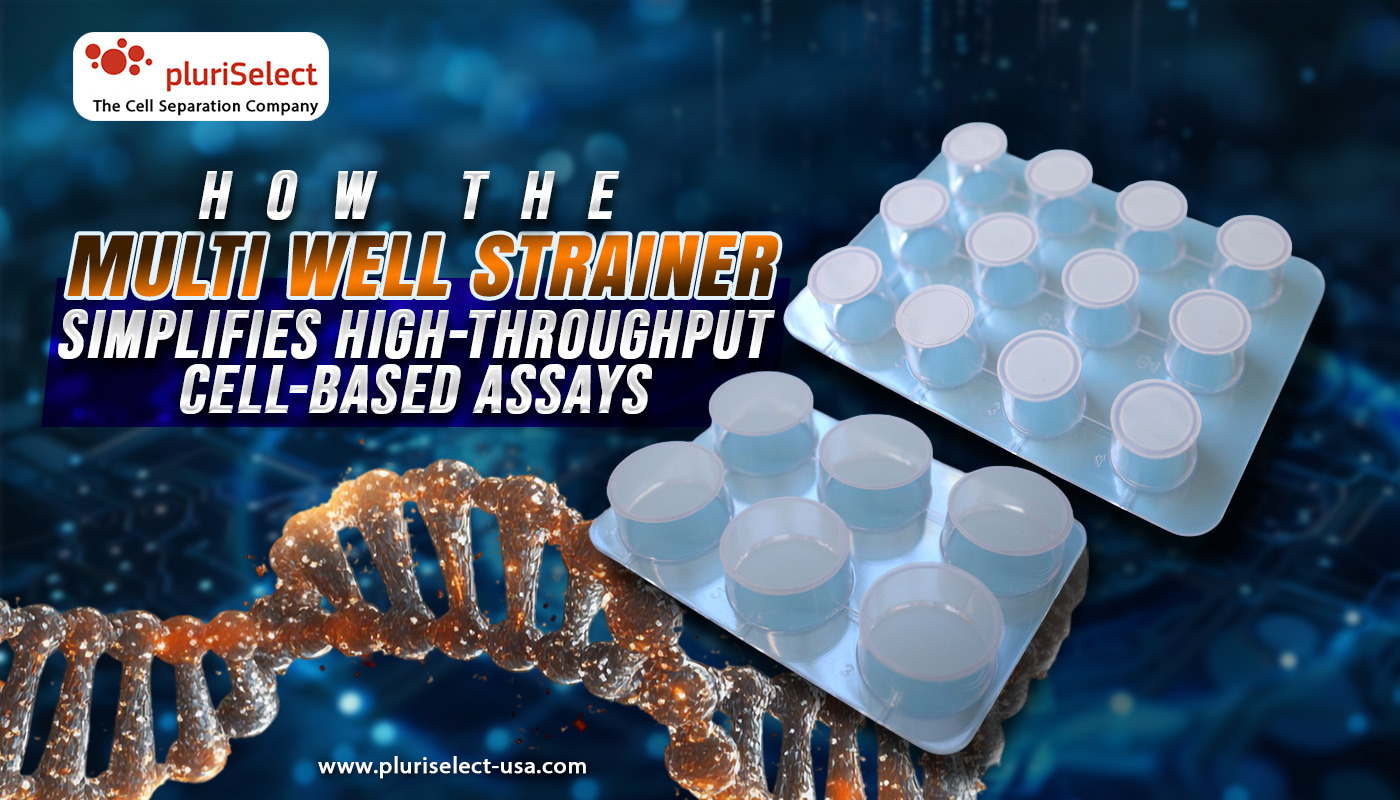
High-throughput cell-based assays play an important role in laboratory research by allowing multiple samples to be tested simultaneously. They are widely used to evaluate how cells or multicellular organisms respond to different compounds, making them valuable in research, drug discovery, toxicity studies, and biological investigations. As laboratories handle increasing numbers of samples, they need systems that simplify workflows while maintaining consistency across every well.
However, running multiple assays at the same time presents several challenges. Researchers must prepare samples carefully, transfer them accurately, maintain uniform experimental conditions, and collect reliable results. Managing these steps across several wells can become time-consuming, especially when working with multicellular organisms that require both culturing and testing within the same experiment.
To improve efficiency, laboratories increasingly look for tools that combine several workflow steps into a single, easy-to-use system. Instead of relying on multiple accessories and repeated sample transfers, integrated solutions help simplify handling while supporting more organized experiments.
The Multi Well Strainer has been developed with this objective in mind. Part of the PluriCell product line, it combines cell propagation with size separation in a single platform. Designed to fit a wide range of multi-well plates from different manufacturers, it provides researchers with a practical system for culturing, treating, and evaluating samples without introducing unnecessary complexity.
This article explores how the Multi Well Strainer simplifies high-throughput cell-based assays, the challenges it addresses, and the advantages it offers for laboratories working with single-cell and multicellular organisms.
High-throughput assays allow researchers to study many samples under similar conditions. While this improves productivity, it also creates practical challenges that can affect the efficiency of laboratory workflows.
One of the primary challenges is handling numerous samples at the same time. Each well represents an individual experiment that requires careful preparation, treatment, and observation. As the number of samples increases, maintaining an organized workflow becomes more demanding.
Researchers need systems that allow them to process several samples without introducing unnecessary handling steps or increasing the risk of confusion between wells.
Reliable experimental results depend on consistency. Every sample should experience similar conditions so that differences in the results reflect the treatment rather than variations in sample handling.
When researchers use separate tools for culturing, transferring, and testing samples, maintaining this consistency can become more difficult. Additional handling may also increase the possibility of disturbing delicate samples during the experiment.
High-throughput studies often involve more than individual cells. Many laboratories work with multicellular organisms such as parasites and nematodes to study biological responses under different experimental conditions.
Handling these organisms requires a system that supports both cultivation and testing while making it easy to observe their response to treatment.
Many assays focus on observing how organisms respond after exposure to a target compound. Researchers may need to evaluate movement, paralysis, cytotoxicity, or survival across multiple wells. Using separate equipment for each stage of the experiment can make these measurements more time-consuming and may introduce unnecessary workflow interruptions.
Because of these challenges, laboratories benefit from systems that combine several experimental steps into a single, coordinated workflow.
The Multi Well Strainer is part of the PluriCell product line, which was developed to combine cell propagation with size separation. Instead of treating these as separate laboratory processes, the system brings them together within a single platform designed for high-throughput applications.
At the center of the system is a nylon-mesh strainer plate that fits directly into compatible multi-well plates. The strainer plate and the well tray work together to create a ready-to-use setup for culturing and testing samples within the same experiment.
Currently, the Multi Well Strainer is available with mesh sizes of 72 µm and 210 µm, providing researchers with options suitable for different experimental requirements. The product line is expected to expand further, with planned mesh sizes ranging from 5 µm to 500 µm, giving laboratories greater flexibility for future applications.
The system is designed to fit a wide range of multi-well plates from different manufacturers. At present, it is available for 6-well and 12-well plates, with future plans to include 24-well and 48-well formats. This compatibility allows researchers to integrate the Multi Well Strainer into existing laboratory workflows without replacing their preferred plate systems.
Rather than functioning as a simple filtration accessory, the Multi Well Strainer serves as an integrated platform that supports both sample cultivation and experimental evaluation. By combining these functions, it helps laboratories organize complex experiments more efficiently while reducing unnecessary handling throughout the workflow.
The Multi Well Strainer is designed to make cell-based assays more straightforward by bringing several laboratory steps together within one coordinated system. Instead of transferring samples between different devices during the experiment, researchers can perform multiple stages of the workflow using the same setup.
The process begins by transferring parasites, nematodes, or other multicellular organisms into the wells. Once the samples are in place, researchers introduce the target compound according to the experimental design.
Because the strainer plate and well tray are designed to work together, the same system supports both treatment and observation. After exposure to the compound, researchers can measure the migration of the organisms to evaluate their biological response. This integrated workflow reduces the need for repeated sample transfers between separate laboratory devices. Fewer handling steps help laboratories keep experiments organized while making it easier to manage multiple wells within a high-throughput assay.
The ready-to-use design also supports consistent experimental procedures across different wells. Researchers can follow the same workflow throughout the experiment, helping create a structured process for culturing, treatment, and analysis.
The Multi Well Strainer is designed to support laboratories working with a variety of biological samples. Unlike systems intended for only one type of experiment, it provides a practical platform for both single-cell and multicellular organism studies. This flexibility allows researchers to use the same system across different research projects while following a consistent experimental workflow.
Single-cell studies often require controlled conditions that allow researchers to monitor how cells respond to different treatments. The Multi Well Strainer supports these experiments by providing a structured environment where cells can be cultured and observed within the same well-based system. Using a consistent setup across multiple wells also helps researchers compare responses under different experimental conditions while managing several samples at once.
The system is equally suitable for experiments involving multicellular organisms. Researchers can transfer parasites, nematodes, and other multicellular organisms directly into the wells before introducing the target compound.
Because the organisms remain within the integrated strainer and well system throughout the experiment, researchers can focus on evaluating biological responses rather than repeatedly transferring samples between different laboratory devices.
One of the key strengths of the Multi Well Strainer is its ability to support multiple assay types within the same platform.
Researchers can use the system for assays that measure:
Paralysis
Cytotoxicity
Death of multicellular organisms
After treatment with the target compound, researchers evaluate the migration of the organisms. Measuring this movement provides valuable information about how the organisms respond under different experimental conditions. Having culturing, treatment, and observation integrated into one workflow makes these studies easier to organize while reducing unnecessary sample handling.
In addition to supporting different biological applications, the Multi Well Strainer offers several practical advantages that help laboratories manage high-throughput experiments more efficiently.
Moving samples between multiple laboratory devices can increase both processing time and the possibility of disturbing the experiment. The Multi Well Strainer minimizes these interruptions by allowing several experimental stages to take place within the same integrated system. Researchers can transfer organisms into the wells, apply treatments, and evaluate migration without introducing unnecessary workflow changes.
High-throughput assays often involve numerous samples being processed simultaneously. Keeping these experiments organized becomes increasingly important as the number of wells grows. The Multi Well Strainer provides a structured well-based format that allows researchers to manage multiple experiments using a consistent workflow across every well.
Laboratories frequently use multi-well plates from different manufacturers. The Multi Well Strainer has been designed to fit a wide range of these plate systems, making it easier to incorporate into existing laboratory procedures. Current compatibility with 6-well and 12-well plates also provides flexibility for laboratories that already use these formats in routine experiments.
Research requirements continue to evolve, and laboratory equipment should be able to grow alongside them. The planned expansion of the PluriCell product line demonstrates this flexibility. Future mesh sizes ranging from 5 µm to 500 µm, along with additional plate formats including 24-well and 48-well systems, will provide researchers with more options for adapting the Multi Well Strainer to different experimental requirements.
This scalability allows laboratories to continue using a familiar workflow while expanding their research capabilities.
Selecting the appropriate Multi Well Strainer configuration begins with understanding the goals of the experiment. Different studies may require different mesh sizes or plate formats depending on the organisms being evaluated and the type of assay being performed.
The Multi Well Strainer is currently available in 72 µm and 210 µm mesh sizes. Choosing the appropriate option depends on the size of the organisms being studied and the objectives of the experiment.
As additional mesh sizes become available, researchers will have even greater flexibility to match the filtration system to their specific laboratory requirements.
Current versions are designed for 6-well and 12-well plates. Laboratories can select the format that best matches the number of samples they plan to process while maintaining an organized workflow.
Future compatibility with 24-well and 48-well plates will further support laboratories conducting larger high-throughput studies.
When establishing new laboratory workflows, it is useful to consider both current and future research needs. A system that supports multiple mesh sizes and plate configurations allows laboratories to adapt as experimental requirements change without completely redesigning their workflow.
The Multi Well Strainer provides a flexible foundation that can continue supporting laboratories as research projects become more complex or increase in scale.
High-throughput cell-based assays require more than the ability to process multiple samples at once. They also depend on workflows that are organized, consistent, and easy to manage from sample preparation through final analysis.
The Multi Well Strainer addresses these needs by combining cell propagation and size separation within a single integrated system. Its ready-to-use strainer plate and well tray allow researchers to culture single-cell and multicellular organisms, introduce target compounds, and evaluate organism migration without relying on multiple laboratory devices or repeated sample transfers.
The system also supports a variety of research applications, including paralysis, cytotoxicity, and death assays involving parasites, nematodes, and other multicellular organisms. Compatibility with a wide range of multi-well plates further simplifies integration into existing laboratory workflows, while planned expansions in mesh sizes and plate formats provide flexibility for future research.
By bringing several stages of the experimental process together in one platform, the Multi Well Strainer helps laboratories simplify high-throughput cell-based assays, improve workflow organization, and support more efficient biological research.












 The Cell Separation Company