Cookie Settings
We use cookies to provide an optimal experience for you. Technically required cookies are used for making shopping possible, statistics are used for anonymized Google Analytics. You can read everything in our updated privacy policy.
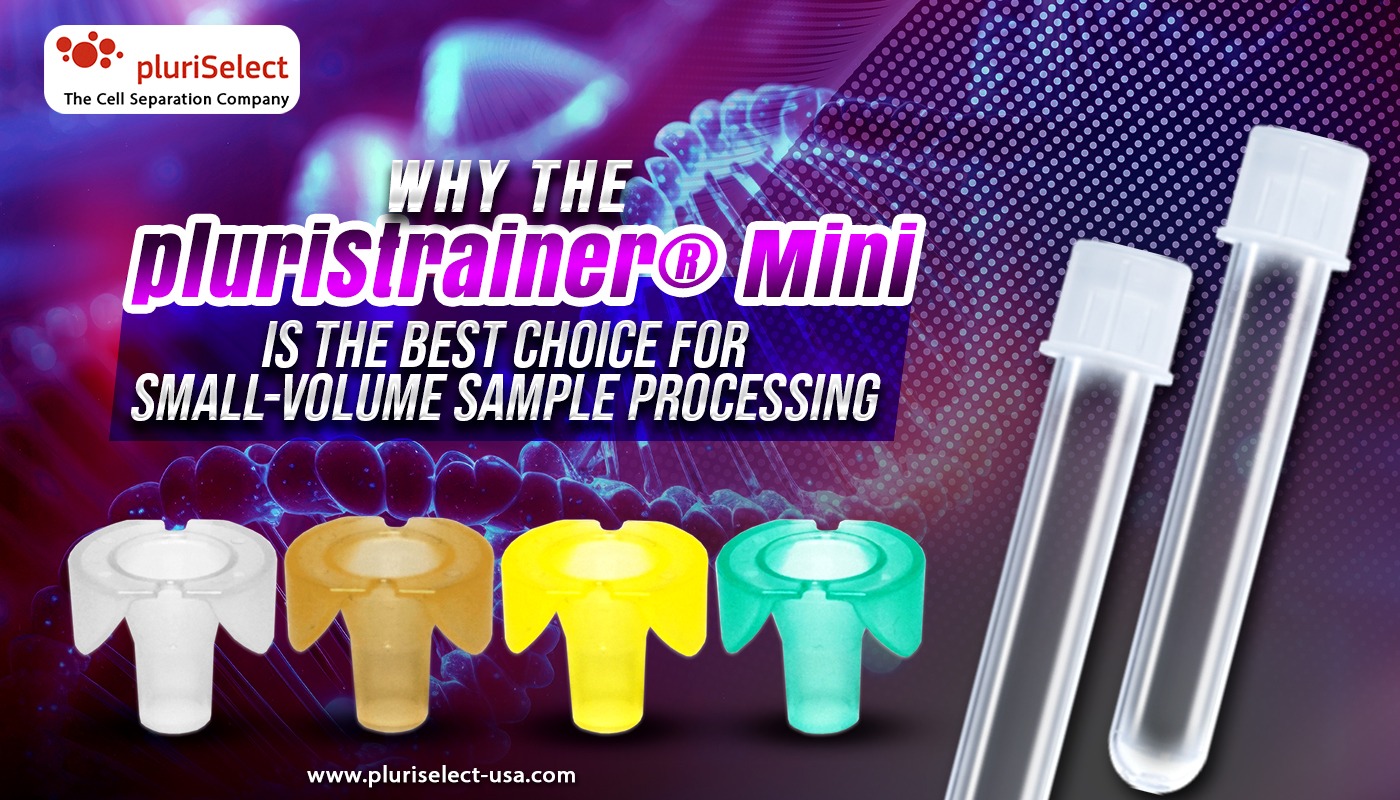
Small-volume samples are often some of the most valuable materials handled in a laboratory. Whether they come from limited biological specimens, specialized experiments, or carefully prepared cell suspensions, every microliter matters. Losing part of the sample during preparation can affect downstream workflows and, in some cases, require researchers to repeat experiments or collect additional samples.
Sample preparation is therefore more than a routine laboratory step. It is the foundation for obtaining reliable and reproducible results. Before samples move to applications such as flow cytometry, cell labeling, or other analytical techniques, they often need to be filtered to remove unwanted particles, cell aggregates, or coagulated material. The challenge is performing this filtration without introducing unnecessary handling or losing valuable sample material.
Many standard filtration devices are designed for larger sample volumes. While they perform well in those applications, they may not always provide the convenience or efficiency needed when working with smaller quantities. Researchers handling limited sample volumes benefit from a filtration device specifically developed for these workflows rather than adapting equipment intended for larger-scale processing.
The pluriStrainer® Mini has been designed with this objective in mind. It is a sieving device, also referred to as a cell strainer, developed for laboratory applications requiring the filtration and purification of liquids. Unlike conventional strainers, it has been optimized specifically for small sample volumes while maintaining compatibility with a wide range of commonly used laboratory tubes and plates.
Its thoughtful design combines practical handling, multiple pore size options, and ready-to-use convenience within a compact format. By helping researchers prepare cleaner samples while simplifying laboratory workflows, the pluriStrainer® Mini provides a practical solution for laboratories that routinely process small-volume samples.
This article explores why the pluriStrainer® Mini stands out for small-volume sample processing, how its design addresses common laboratory challenges, and the many ways it supports efficient sample preparation.
Filtering a large laboratory sample and filtering a small one are not the same task. When working with limited sample volumes, researchers have less material available, making every handling step more important. Even minor losses during preparation can affect the amount of material available for downstream analysis.
For this reason, small-volume workflows require filtration devices that are designed specifically for these applications rather than simply scaled-down versions of larger systems.
Small samples often represent valuable research material that cannot be easily replaced. Researchers may only have one opportunity to process a specimen, making careful handling essential throughout the preparation process.
Using a filtration device optimized for small volumes helps reduce unnecessary sample loss while maintaining an efficient workflow.
Many laboratory techniques depend on well-prepared samples. Cell aggregates, debris, or unwanted particles can interfere with downstream procedures, making proper filtration an important part of sample preparation.
Removing these unwanted materials before analysis allows researchers to begin with cleaner samples that are better suited for later laboratory applications.
Working with small samples should not require complicated laboratory procedures. Equipment designed specifically for limited sample volumes allows researchers to process samples more conveniently while reducing unnecessary handling.
A compact filtration system also makes it easier to integrate sample preparation into routine laboratory workflows without requiring additional accessories or complicated setup procedures.
Another challenge of small-volume processing is the wide variety of tubes and containers used in different laboratories. Researchers frequently work with reaction tubes, centrifuge tubes, FACS™ tubes, cryo vials, or multi-well plates depending on the experiment.
A filtration device that fits multiple container types provides greater flexibility while reducing the need for separate filtration systems.
The pluriStrainer® Mini is a sieving device developed for laboratory applications that require the filtration and purification of liquids. It has been specifically optimized for small sample volumes, allowing researchers to prepare samples efficiently while maintaining compatibility with commonly used laboratory containers.
Unlike filtration devices designed primarily for larger volumes, the pluriStrainer® Mini focuses on making small-volume processing more convenient without sacrificing flexibility.
One of the defining characteristics of the pluriStrainer® Mini is its optimization for limited sample quantities. Its compact format allows researchers to process valuable samples while working with a 1 ml reservoir, making it well suited for experiments involving smaller liquid volumes.
Different laboratory applications require different levels of filtration. To accommodate a variety of workflows, the pluriStrainer® Mini is available in pore sizes of:
5 µm
10 µm
20 µm
40 µm
70 µm
100 µm
200 µm
This range allows researchers to select the pore size that best matches the requirements of their specific application.
Laboratory efficiency depends not only on filtration performance but also on ease of use. The pluriStrainer® Mini includes an optimized gripping surface that allows researchers to handle the device comfortably during routine sample preparation.
Its ergonomic design supports everyday laboratory work while making filtration procedures easier to perform.
The pluriStrainer® Mini is supplied sterile and ready to use. Laboratories can incorporate it directly into their workflows without additional preparation, helping save time during routine sample processing.
The device also includes replaceable strainer caps and replaceable pre-separation filters. These features provide additional flexibility by allowing researchers to adapt the filtration setup according to their laboratory requirements.
Laboratories use many different types of containers depending on the experiment being performed. A filtration device that works with only one format may require researchers to transfer samples between containers, introducing additional handling steps.
The pluriStrainer® Mini has been designed to avoid this limitation by fitting a wide variety of commonly used laboratory tubes and plates.
It is compatible with:
1.5 ml reaction tubes
2.0 ml reaction tubes
15 ml conical centrifuge tubes
FACS™ tubes
Cryo vials
24-well plates
48-well plates
This broad compatibility allows researchers to integrate the same filtration device into different laboratory workflows without changing their preferred sample containers. Instead of adapting experiments to the filtration device, laboratories can continue using familiar equipment while incorporating efficient small-volume filtration into their routine procedures.
This flexibility is particularly valuable in shared laboratory environments where different teams may use different tube formats and plate configurations. Rather than maintaining multiple filtration devices for different containers, researchers can rely on a single solution that adapts to a variety of laboratory setups. The result is a more streamlined workflow with fewer equipment changes, simpler sample handling, and greater convenience when processing valuable small-volume samples.
The value of a laboratory filtration device depends on how effectively it supports day-to-day research. The pluriStrainer® Mini has been designed for a variety of applications where small-volume samples require careful preparation before downstream analysis. Its compact design and multiple pore size options make it suitable for laboratories handling different sample types while maintaining a consistent workflow.
Rather than serving a single purpose, the pluriStrainer® Mini can be incorporated into several routine laboratory procedures.
A well-prepared cell suspension is often the starting point for many laboratory experiments. Samples containing debris or unevenly distributed material can affect downstream analysis and make results more difficult to interpret.
The pluriStrainer® Mini helps researchers prepare cleaner cell suspensions by removing unwanted material while allowing the desired sample to pass through the selected pore size. Starting with a more uniform suspension supports better consistency throughout later stages of the experiment.
Flow cytometry requires samples that move smoothly through the instrument. Cell aggregates or large particles may interfere with sample analysis and reduce workflow efficiency.
Using the pluriStrainer® Mini during sample preparation helps remove unwanted material before analysis. This allows researchers to begin with cleaner samples that are better suited for flow cytometry without adding unnecessary processing steps.
During sample preparation, cells may form aggregates or clusters that are not suitable for downstream applications. If these remain within the sample, they may influence later experimental procedures.
The pluriStrainer® Mini helps remove these larger structures while preserving the desired cell population. This allows laboratories to prepare more consistent samples for additional analysis or processing.
Blood samples often require filtration before they are used in laboratory procedures. Large particles within the sample may interfere with downstream applications or reduce overall sample quality.
The pluriStrainer® Mini provides a convenient way to remove these larger particles while working with small sample volumes. This helps researchers prepare blood samples that are better suited for subsequent laboratory analysis.
Blood samples may also contain coagulated material that should be removed before further processing. Eliminating coagulum during sample preparation helps improve sample consistency and supports smoother laboratory workflows.
Using the pluriStrainer® Mini allows researchers to complete this filtration step while continuing to work within the same small-volume processing workflow.
Many laboratory procedures require samples to be prepared before magnetic or fluorescent cell labeling. Removing unwanted particles and aggregates beforehand helps provide a cleaner starting sample for these labeling techniques.
The pluriStrainer® Mini supports this preparation stage by producing samples that are ready for subsequent laboratory procedures without introducing unnecessary handling steps.
Beyond its laboratory applications, the pluriStrainer® Mini includes practical features that make routine sample preparation easier. These features are designed to improve usability while helping researchers maintain efficient workflows throughout the working day.
Laboratory workflows often require flexibility. The replaceable strainer cap allows researchers to adapt the device as needed while continuing to use the same filtration system.
This practical feature supports routine laboratory work without requiring an entirely new device for every filtration task.
Different sample types may benefit from different filtration approaches. The availability of replaceable pre-separation filters provides additional flexibility when preparing samples for various laboratory applications.
Researchers can adapt the filtration setup according to their workflow requirements while continuing to use the same compact device.
Small improvements in equipment design can make a noticeable difference during routine laboratory work. The optimized gripping surface allows researchers to handle the pluriStrainer® Mini comfortably throughout repeated filtration procedures.
Easy handling becomes particularly valuable when multiple samples are processed during the same experiment, helping reduce unnecessary interruptions while maintaining an organized workflow.
Preparing laboratory equipment before every experiment adds additional time to sample processing. Because the pluriStrainer® Mini is supplied sterile and ready to use, researchers can incorporate it directly into their workflows without additional preparation.
This convenience allows laboratories to move efficiently from sample collection to filtration while maintaining consistent preparation procedures.
Small-volume samples require careful handling because every portion of the sample can be important for downstream research. Using filtration equipment specifically designed for these workflows helps laboratories reduce unnecessary sample loss while maintaining efficient and consistent sample preparation.
The pluriStrainer® Mini has been developed to meet these needs. Its compact design, broad compatibility with commonly used laboratory tubes and plates, multiple pore size options, and ready-to-use format make it well suited for laboratories working with limited sample volumes.
Beyond its design, the device supports a wide range of laboratory applications, including preparing cell suspensions, supporting flow cytometry, removing cell aggregates, filtering blood samples, eliminating coagulum, and preparing samples for magnetic or fluorescent cell labeling. Together, these capabilities allow researchers to perform routine sample preparation using a single, practical filtration solution.
For laboratories seeking an efficient way to process small-volume samples without adding unnecessary complexity to their workflows, the pluriStrainer® Mini offers a reliable solution that combines convenience, flexibility, and consistent sample preparation in one compact device.













 The Cell Separation Company